Golf for English Learners: Language, Culture, and the Major Tournaments
Learn golf vocabulary in English and explore how golf shapes culture in the US, UK, and Australia — just in time for the PGA Championship.
SPORT
5/8/202611 min read


Welcome to this guide to golf for English learners. Golf is one of the most popular sports in the English-speaking world, and learning about it is a great way to improve your English vocabulary and understand the cultures of countries like the United States, the United Kingdom, and Australia. In this article, you will find golf vocabulary and definitions, a short history of the game, a guide to the famous Major tournaments, useful golf idioms, and recommended films and books. Now is also a perfect time to read it — the first women's Major of the year has just finished, and next week the PGA Championship, the second men's Major, begins.
What do you think about golf? In many non-English speaking countries, people think golf is only a sport for rich people. But is that really true?
In English-speaking countries such as the United States, Australia and the United Kingdom, golf is actually one of the most popular sports to play. In the United States, almost 30 million people played golf last year. The United Kingdom has the second-highest number of registered golfers in the world after the US. And in Australia, around 20% of adults play golf, making it one of the country’s most popular participation sports (sports that people play themselves, not just watch). Another English-speaking country, Canada, has the second-highest number of registered golfers and the second-highest number of golf courses in the world. Golf is also very popular in Ireland, South Africa and New Zealand.
A Short History of Golf
Golf was invented in Scotland more than 500 years ago. According to a famous story, bored shepherds first played the game by hitting stones with wooden sticks across the fields. By the 16th century, golf was popular throughout Scotland. The first players were shepherds and soldiers, but later the rich and powerful, including kings and queens, were playing it. Golf then spread to England, and later to other parts of the British Empire, including Ireland, the United States, Canada, Australia and South Africa.
Photo by Courtney Cook on Unsplash
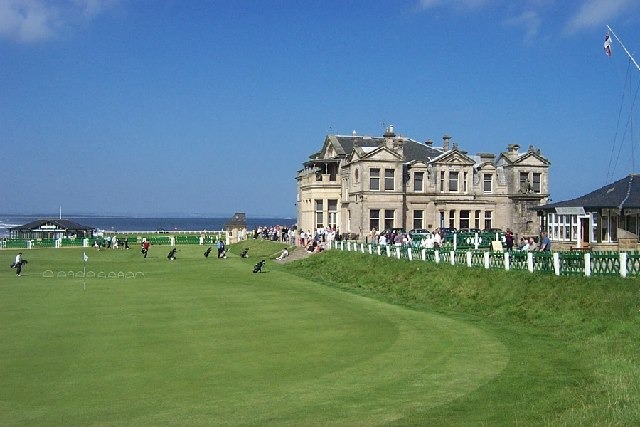
By paul birrell, CC BY-SA 2.0, https://commons.wikimedia.org/w/index.php?curid=698798
The most important place in the history of golf is St Andrews, a small town on Scotland’s east coast. The Old Course at St Andrews is often called "the home of golf," and golfers from around the world visit it. The Royal and Ancient Golf Club of St Andrews, known as the R&A, was founded there in 1754. For many years, it wrote the rules of golf used around the world. Today, the R&A and the United States Golf Association share this responsibility.
In the 19th century, golf changed from a simple pastime into an organised international sport. The first Open Championship — which we will learn more about in a later section — was held in 1860 at Prestwick Golf Club in Scotland. Only eight players competed in the tournament. Today, over 150 years later, the same tournament attracts the best golfers in the world, and millions of people watch it on television.
In the 20th century, golf became truly global. New golf clubs and courses opened, and international tournaments became more common. Great players began to emerge from outside Scotland and England — from the United States, Australia, and South Africa. Some of these players became what we call “household names”. That means that lots of people know who they are, even people who don’t follow golf or sports. Some examples of household names are Tiger Woods, Jack Nicklaus and Arnold Palmer. Have you heard of any of them?
Since the 1980s, golf has become very popular in Asia too, especially in countries like Japan, Korea, China, Thailand and the Philippines. These countries too are producing champion players. A lot of the current best female players in the world are from Asia.
Golf Culture in English-speaking Countries
The United Kingdom
As inventors of golf, Scottish people are very proud of the game. Scottish culture helped shape key parts of the game, such as honesty (no referee or umpire) and good manners (don’t make a noise while another player has a shot). Scotland has many public golf courses which anyone can play at.
In England, golf is connected with its class system – the way English society is divided into groups based on money, jobs, education and family background. Golf reflects this in interesting ways. Many golf clubs are very difficult and expensive to join, and a lot of golf clubs have very strict dress codes, that is rules about what you can and cannot wear either on the course or inside the clubhouse. For this reason, many English people still think golf is a rich person’s game. However, there are also public golf courses that are open and affordable to everyone.
Another feature of many English courses is that they are not enclosed and are shared with hikers, dog walkers, and local residents. This is because a lot of English courses are built on common land, that is, land that is not privately owned.
The United States
In the United States, golf is not only a popular hobby, but it is also a huge professional sport. A professional athlete is someone who plays a sport as their job and earns money from it, usually with a high level of skill and training. Many of the world’s best golfers live in the United States and play tournaments throughout the year. Talented young players can get golf scholarships with American universities, where they train and study at the same time.
Another unique aspect of American golf is that some people, especially young men, like to drink alcohol while they play. This, of course, means that sometimes the games can become noisy as players get a little drunk! In most other countries, for example, England and Australia, drinking on the golf course is usually not allowed.
American golfers are also more likely to use golf buggies – small electric vehicles for driving around the course. In other countries, it is more common to walk instead. (At some golf clubs in England, you need a note from your doctor if you want to ride a buggy!) As most golf courses are around six kilometres long, this means that golf in the United States is less a test of fitness than in other countries.
Many people also associate golf in the United States with expensive and exclusive country clubs, just like in the movies. Some of these country clubs can cost over $150,000 just to join, reinforcing the image that golf is a game for rich people!
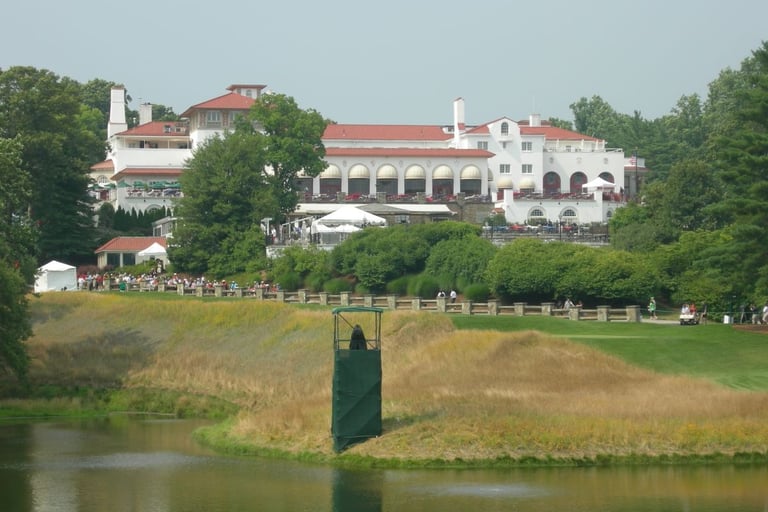
The Congressional Country Club in Maryland, United States.
By Carl Lindberg - Own work, CC BY 2.5, https://commons.wikimedia.org/w/index.php?curid=2483659
Australia
Australia has a lot of public golf courses – courses where you don’t need to be a member of the golf club to play. Many of them are owned by the local government and played on government-owned land, and the cost of playing a game of golf is affordable for everyone. (My local golf course costs only $30 to play a 9-hole game of golf- so good value for two hours of fun). The government also provides money to run programs to encourage children to play the game.
Most Australian golf clubs have weekly golf competitions for their members, with results carefully recorded throughout the year. At the end of the year, each club will award Club Champion trophies to the players with the best results.
Australia also has the “longest” golf course in the world, the Nullarbor Links. It is played across fifteen different locations in the Nullarbor Desert from South Australia to Western Australia. It was created to help make the long three-day drive across the Nullarbor Desert more interesting.
Canada
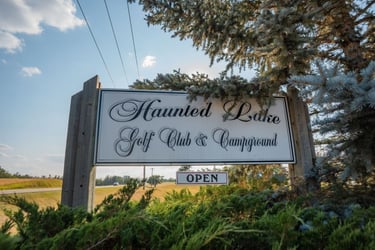
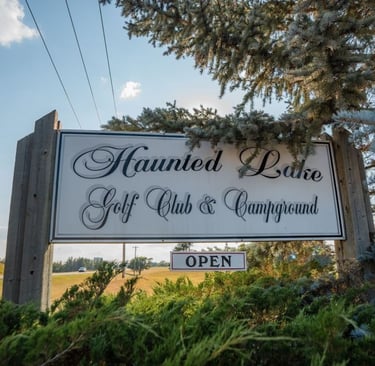
Canada has one of the highest golf participation rates in the world – remarkable given that in many parts of the country, golf courses are closed for several months of the year due to snow. Another interesting aspect of Canadian golf is that they have a lot of 9-hole golf courses, compared to the usual 18-hole courses found in most of the world. Canada also seems to have more “haunted” golf courses than other parts of the world, for example, the Jasper Park Golf Club and its "Point Cabin" ghost, or Haunted Lakes Golf Club in Alberta.
Canada has a surprising number of golfers who play left-handed. It is believed this is because Canadians grow up playing hockey. The grip they use to hold a hockey stick feels more natural if they play golf left-handed. Around 30 to 40% of Canadian golfers play left-handed, compared to only 5 to 10% in the rest of the world!
The Golf Majors Explained: The Most Important Golf Tournaments
The top professional golf players play in tournaments throughout the year. Tournaments are often weekly, from spring to autumn, and together these tournaments are called a circuit or a tour. The men’s leading circuit is the PGA Tour, played mostly in the United States. Europe’s professional golfers play mainly on the DP World Tour. The women also have their circuits, the most important being the LPGA Tour and the Ladies European Tour.
There are also a handful of tournaments that are considered more important and prestigious than the others. These are known as the Majors.
The men have four majors:
The Masters – played every April at the Augusta National Golf Club in Georgia, United States. It is the first Major of the year.
The PGA Championship – held mid-May at a different American course each year. This year it will be played in Pennsylvania.
The US Open – held every June on Father’s Day weekend, at a different American course each year. This year it will be played in New York State.
The Open Championship – the oldest Major of all, played every July at different British courses. In the United States, it is known as the “British Open”, though the rest of the world simply calls it “The Open”. Approximately every five years, it returns to St Andrews in Scotland. This year it will be played at Southport in North West England.
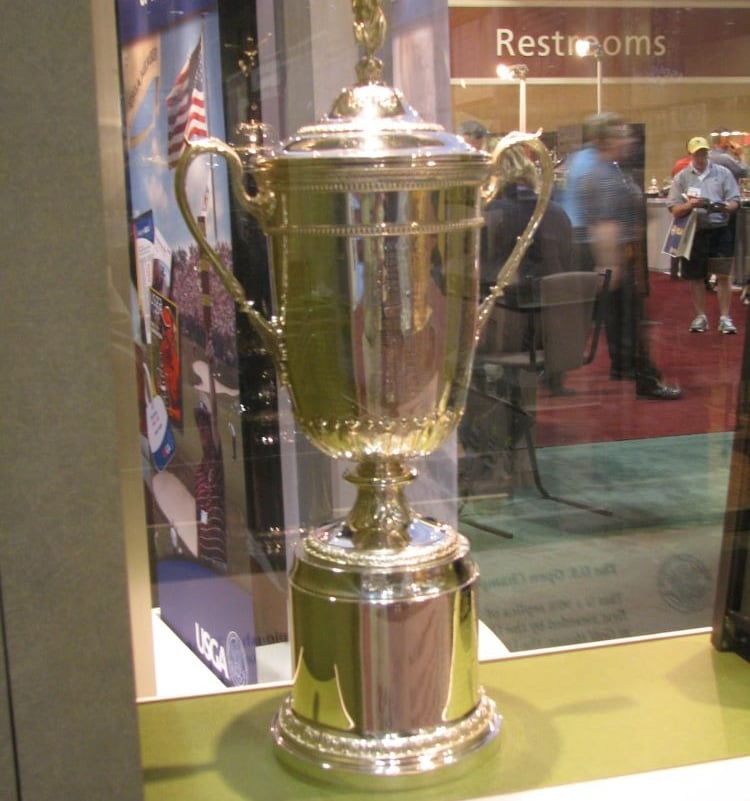
The US Open Trophy
By Dan Perry - originally posted to Flickr as US Open Trophy at the 2008 PGA Golf Show, CC BY 2.0, https://commons.wikimedia.org/w/index.php?curid=7132912
The women also have their Major tournaments, five of them:
The Chevron Championship (April, United States)
The US Women’s Open (early June, United States)
The Women’s PGA Championship (late June, United States)
The Evian Championship (July, France)
The Women’s Open (late July, early August, United Kingdom)
Golf Vocabulary: Key Words and Phrases for English Learners
Like many sports, golf has its own special vocabulary to learn in order to understand and talk about it. Here are some common golf words and phrases:
Club: Lets start with a golfing homonym (a word with two completely different meanings). Firstly, a club is the stick used to hit the golf ball. Golfers carry a set of up to 14 different clubs, each designed for a different type of shot. Secondly, a club is the organisation that golfers join to play together regularly, and the buildings and course they share. So a golfer who is "a member of a golf club" goes to "the golf club" to hit the ball with "a golf club"!
Hole: And another word with two meanings in golf. Firstly, it is the small hole in the ground where you must hit the ball. Secondly, it means one section of the course. A golf course is divided into 18 holes or sections.
Par: The number of shots a good player is expected to need for a hole.
Tee: The small peg that holds the ball for the first shot, or the place where you start each hole. It can also be used in a phrasal verb, “tee off”, and it means to start the game (‘We’re teeing off at eight o’clock') and to also take your first shot at each hole (“You won the last hole, so you tee off first this hole.”)
Driver: The club used for long shots, usually from the tee. It is sometimes called a “wood” too, because the club heads used to be made from wood.
Putt: A gentle shot on the green to roll the ball into the hole.
Bunker: A large hole on the course filled with sand, also called a “sand trap”.
Birdie: When you finish a hole one shot under par. For example, if it is a par four hole, and you finish it with three shots, you’ve hit a birdie!
Bogey: When you finish a hole one shot over par.
Handicap: A number that shows a golfer’s skill level, used so that players of different abilities can compete fairly against each other. The lower the handicap, the better the player. Professional golfers have a zero handicap.
Caddie: A person who carries a golfer’s clubs and helps with advice during the game.
Links: A golf course near the sea, usually with sandy ground and few trees.
The green: The area with very short, smooth grass around the hole.
Fairway: The grass area between the tee and the green.
Fore!: A warning shout used when a ball may hit someone.
And here are some common English idioms that originated from golf:
And finally, an idiom that sounds like a golf idiom, but isn’t:
Below par: In golf, below par is a great thing – it means you took fewer shots than you were expected to. But in everyday English, “below par” is negative. “Your work has been below par lately” means your work is not good enough. So why are there two completely different meanings? It is because “par” is a Latin word that means “equal” or “even”, so below par means less than equal. In the 17th century, it was first used to describe investment or shares that weren’t very good value, so nothing to do with golf.
Golf Movies and Books Worth Watching and Reading
Because golf is so popular in English-speaking countries, there are many movies and books about the game.
Films worth watching:
Caddyshack and Happy Gilmour – two comedies that find the funny side of golf
Tin Cup –a romantic comedy set around the US Open
The Phantom of the Open – a warm, true story about an ordinary man who qualified for the Open Championship.
For those who like documentaries:
Full Swing (Netflix) – shows what it’s like to play on the PGA tour.
Books for stronger readers:
A Good Walk Spoiled by John Feinstein, who writes about a year inside the PGA Tour
Golf in the Kingdom by Michael Murphy, a more philosophical and personal look at the game
The Match by Mark Frost, a true story about a legendary golf game in 1956 between the two best golfers in the world versus two amateurs.
There are also many excellent biographies and autobiographies of famous golfers, and of course, lots of books on how to play golf and how to improve your game.
FAQ: Golf and English Vocabulary
What are the four golf Majors?
The four men’s golf Majors are The Masters, the PGA Championship, the US Open, and The Open Championship.
Female golfers also have Majors – however there are five of them: The Chevron Championship, the US Women’s Open, the Women’s PGA Championship, the Evian Championship, and the Women’s Open.
Why is golf popular in English-speaking countries?
Golf is popular because it combines sport, social life, outdoor exercise, and business networking. It is especially suitable for countries with lots of space (the United States, Canada, Australia) and nice weather most of the year (large areas of the United States, Australia, South Africa).
What does “par” mean in golf?
Par is the number of shots a good golfer is expected to need for a hole. The lower the par, the shorter the hole usually. For example, a par three hole is usually a lot shorter than a par five hole.
Is golf only for rich people?
Not always. Many countries, such as Australia and Scotland, have affordable public golf courses. Even England and the United States, known for their expensive private clubs and rich country clubs, also have golf courses open to the public that are much cheaper. Golf equipment, especially the clubs, can be very expensive. But it is also possible to buy a lower quality set of clubs for a few hundred dollars.
I hope you enjoyed this article about golf and also learnt some useful English vocabulary. If you are interested in music and travel, you should next read the articles on Songs from the Sixties and the city of York.