Learn English with 17 Great Songs of the 1960s
Discover 17 classic songs from the 1960s — from The Beatles to Sam Cooke — with language tips, cultural facts, and YouTube links for English learners.
MUSIC
4/16/202615 min read
Music, Language and Culture for English Learners
Welcome to the first article in our Goldfields English Conversation Music Series! This series will help you learn English with songs. I will share some of the most popular and memorable songs from the 1960s, 70s, 80s and up to today. I will start with 1960s songs for English learners to listen to and improve their English.
Music is a wonderful way to learn English. A song can help you:
Hear how real English sounds
Remember new words and expressions
Discover something about other countries’ culture and history
Have fun while learning!
Tips for English learners on how to use these articles
Here is some advice on how to learn English with songs. I’ll be writing in simple, clear English, so please try to read everything in English first. Don’t worry if you don’t understand every word — that’s normal. Here’s a good way to use each article:
Read the article once without stopping.
Read it again and note any words or phrases you don’t know.
DON’T look up every single word you don’t know. However, if you see a word that you’ve come across many times before without knowing the meaning, it’s a good idea to look up its meaning with an online dictionary or translator.
Listen to the song on YouTube and try to follow some of the lyrics.
Each song will include:
Musical style
Language points you can learn from the lyrics
Interesting facts about the song or artist
A link to the YouTube clip so you can listen and enjoy.
Introduction: The Sixties
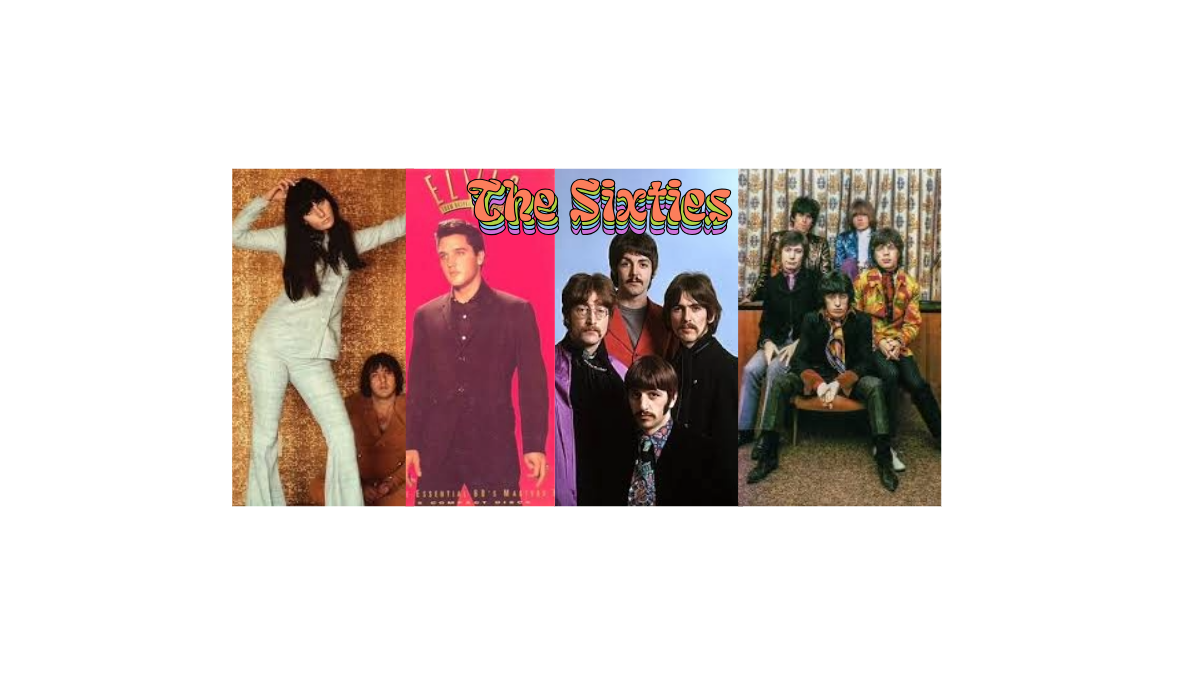
The 1960s were one of the most important decades in modern music. Many big changes happened during this time. Rock music began to sound like the rock we know today. British bands became extremely popular in the United States — a moment now called the British Invasion. Music created by African American artists, such as blues, soul and Motown, finally became part of the mainstream. Protest songs also became popular, especially because of the Vietnam War and new social movements like feminism and civil rights. Psychedelic drugs also influenced some styles of music. And rock ’n’ roll, which had started as music for teenagers in the 1950s, grew more adult and more serious as those teenagers grew up and became adults in the 60s.
1. Wonderful World (1960) – Sam Cooke
Country: United States. Style: R&B (rhythm and blues)
In this song, a schoolboy tells the girl he likes that he is not a very good student and hasn’t learned much in class. But there is one thing he does know — he really likes her. And if they could be together, his world would feel wonderful.
Language point: The song is one of my favourite 1960s songs for English learners, because it lists seven school subjects. So it’s a fun way to learn English school vocabulary. Also notice the repeated line “Don’t know much…” In conversation, we sometimes leave out the subject “I” when the meaning is clear. For example:
A. What did you do this morning? B. Went to the gym.
A. What are you doing tomorrow? B. Don’t know.
Interesting fact: Before the song was released, Sam Cooke used to sing it to girls in bars and pretend he had made it up on the spot — meaning he had just created the song right at that moment. And a sadder fact: less than 5 years after this song became a hit, Sam Cooke was dead – killed in tragic circumstances.
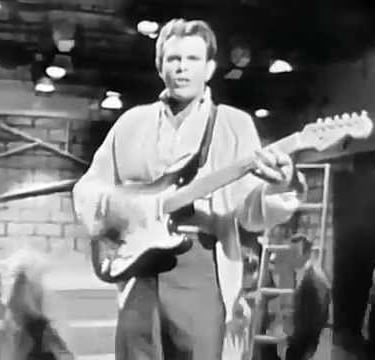
2. Runaway (1961) – Del Shannon
Country: United States. Style: rock ’n’ roll
Songs about romances that have finished, often called “break-up songs” have been popular since the very beginning of pop music. In this one, Del Shannon sings about his “little runaway” — a girl who seems to have left him without giving a reason. The music is full of energy, but the story is sad.
Language point: The verb to wonder is extremely useful for English learners. It means to think about something when you don’t expect a clear answer. It is often followed by why, how, what, or if: “I wonder why he left,” “I wonder how that happened?“ “I wonder if it will rain this weekend.”
Interesting fact: At about 1 minute 10 seconds, there’s a change in the music (in musical terms it is called ‘the bridge’) and we hear a strange electronic instrument. This is the musitron, a special early synthesiser invented by one of the band members.
3. Return to Sender (1962) – Elvis Presley
Country: United States. Style: pop/rock
A list of 1960s songs for English learners has to have an Elvis song, doesn’t it? By 1962, Elvis was not only a huge music star but also a successful film actor. Return to Sender first appeared in the movie Girls, Girls, Girls. In the song, Elvis has had an argument with a girl (listen for the word “quarrel” which is another word for an argument or dispute). He writes her a letter, but it comes back without a reply.
Language point: When a letter is delivered to the wrong address or the person has moved, we write Return to Sender – Address Unknown on the front of the envelope before sending it back.
Interesting fact: In the 1990s, the US Post Office released a special Elvis stamp. Elvis fans bought the stamp, then mailed letters with fake addresses so the envelopes would come back stamped “Return to Sender” — a fun tribute to the song.
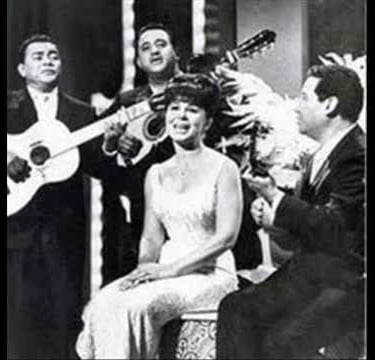
4. Blame It On the Bossa Nova (1963) – Eydie Gormé
Country: United States. Style: A mix of Latin music, rhythm & blues, and pop
The bossa nova is a dance style from Brazil that became popular in the United States in the 1950s and early 1960s. The song tells a simple story about a couple who meet at a dance, fall in love and get married. The singer jokingly suggests she fell in love because of the bossa nova dancing.
Language point:
“Blame it on…/Don’t blame it on…” are useful phrases. It’s another way to say that something is the cause of a problem “It’s the fault of… It’s not [somebody/something’s] fault. However the singer is only joking about a problem – the “problem” is falling in love and getting married to her husband, so not really a problem I hope!
Here are some common example sentences:
You can only blame it on yourself (You are the cause of a problem, no one else)
Don’t blame it on me! (It’s not my fault!)
Often we can simplify it, for example: “You can only blame yourself” and “Don’t blame me!”
Interesting fact:
Eydie Gormé actually hated this song and sang a wrong note at the end so the producers wouldn’t release it. But they did — and it became her biggest hit!
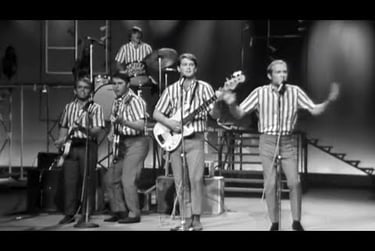
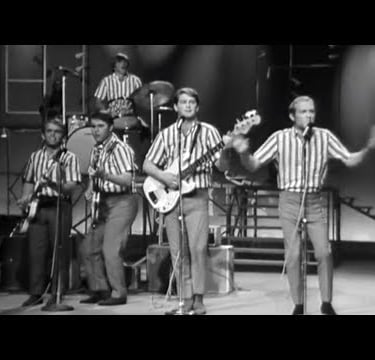
5. Surfin’ U.S.A (1963) – The Beach Boys
Country: United States. Style: Surf rock / surf pop
Surf rock is a very 60s genre (ie style of music). It celebrates the Californian beach lifestyle — sunshine, surfing, parties and good times, and this song is a great example of early surf rock.
Language tip: Don’t worry if you can’t understand every word when you listen. For years, I thought the first line was “If everybody had a notion” — it’s actually “If everybody had an ocean.” (The pronunciation of “a notion” and “an ocean” is almost the same). There’s a bit of 1960s slang that we don’t use anymore, and most of the lyrics are just names of beaches in the U.S. (plus one in Australia). Perhaps it’s not the greatest 1960s song to learn English, but I included it because it’s one of my favourites.
Interesting fact: Only one of the five Beach Boys could actually surf!
6. Under the Boardwalk (1964) – The Drifters
Country: United States. Style: Pop / soul / R&B
Under the Boardwalk is a smooth, romantic song about young love by the sea. A boardwalk is a wooden path or walkway built near a beach or the sea. The singer’s voice is unforgettable — warm and soulful. It’s also a great song for ESL listening practice because the words are very clearly pronounced.
Language point: We’ll be havin’ some fun… We’ll be fallin’ in love. This is the future continuous tense: Subject + will be + verb-ing
We use it to describe actions that will be happening over a period of time in the future.
Interesting fact: One of the best things about the song is the singer’s voice. However, this song could have sounded very different. The day before recording, The Drifters’ lead singer died of a drug overdose (he took to many drugs at the same time). The group decided to record the song anyway, with the other main singer stepping in. The result became one of their biggest hits.
7. (I Can’t Get No) Satisfaction (1965) – The Rolling Stones.
Country: United Kingdom. Style: Rock
This song is famous for its strong guitar riff — a short, repeated musical phrase — and its very catchy melody. It was controversial at the time because some people thought the lyrics were too rude for the radio. (The 60s were a very conservative time). The song also criticises how advertising tries to make us buy things we don’t need.
Language point: “I can’t get no satisfaction” is a double negative: “can’t” + “no”. In standard English, a double negative usually creates a positive (“not unhappy” = “happy”). But in rock and blues music, double negatives are often used for strong emphasis — meaning “I really, really can’t get any satisfaction.”
Interesting fact: Keith Richards, the Rolling Stones guitarist, came up with the famous riff in the middle of the night and recorded it on a small cassette recorder before falling back to sleep.
8. Unchained Melody (1965) – The Righteous Brothers.
Country: United States. Style: Blue-eyed soul
The music style of this song is sometimes known as ‘blue eyed soul’, or white people’s soul (soul is predominantly an African-American style). Blue eyed soul is more pop and commercial sounding. This is a cover version — meaning the song had already been recorded before, in this case in 1955. The Righteous Brothers’ version is slow, emotional and extremely powerful, and it became the most famous version.
Language point: The line “God speed your love to me” uses an old expression. God speed was common in Shakespeare’s time and means “may God hurry something along.” It’s the same grammar construction as “God save the King.”
Interesting fact: Although they called themselves the “Righteous Brothers,” the two members were not actually brothers. For this song they flipped a coin to decide who would sing the lead vocal.
9. Bang Bang (My Baby Shot Me Down) (1966) – Cher
Country: United States. Style: folk rock
This song was written by Cher’s famous husband and singing partner, Sonny Bono, and it tells a story. A boy and girl play together as children, then grow up and get married. Later, he suddenly leaves her without explanation (‘He didn’t even say goodbye’). The music is simple but dramatic.
Language point: The line “he wore black and I wore white” refers to old American Western films, where the “good guy” often wore white and the “bad guy” wore black.
Interesting fact: Although Cher released the original version, another version of the song was also released in 1966, by Nancy Sinatra. Nancy Sinatra’s version in fact became more successful. (However, I like Cher’s version better).
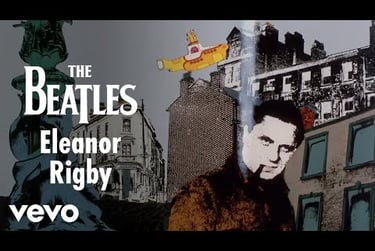
10. Eleanor Rigby (1966) – The Beatles.
Country: United Kingdom. Style: Pop/rock
One of the Beatles’ saddest songs, Eleanor Rigby describes two lonely people: Eleanor Rigby, an older woman and Father McKenzie, a priest.In the song, Eleanor Rigby dies and no one goes to her funeral. Nor does anyone go to Father McKenzie’s church. The song was very different from the Beatles’ earlier happy love songs.
Language point: The line “wearing a face that she keeps in a jar by the door” sounds strange, but it refers to a jar of face cream or anti-ageing cream, used to hide wrinkles — not a real face. We wouldn’t use a sentence like this in conversation – instead these kinds of sentences, where you have to think about the meaning, are used in literature like poetry as well as songs.
Interesting fact: None of the Beatles play instruments on this track. Instead, the music was performed by two classical string quartets (violins, violas and cellos).
11. Ode to Billie Joe (1967) – Bobbie Gentry.
Country: United States. Style: Country / blues
This is another storytelling song, and a very dark one. It begins with the news that Billie Joe McAllister has jumped off a bridge and died. The family in the song reacts calmly — except for the daughter, who tells the story. Later the song jumps forward one year, revealing more sadness. Songs that tell stories are a great way to learn English with music.
Language point: The song is full of exact rhymes: day/hay, eat/feet, ridge/bridge. This is actually a bit unusual in English songs. Many songs have only approximate rhymes or none at all.
Interesting fact: Listeners have always wondered: What did Billie Joe and the girl throw off the bridge the day before he died? Bobbie Gentry, who wrote the song as well as singing it, has never given an answer, so there are lots of theories— a wedding ring, a bottle of illegal drugs, a draft card (that is, the letter from the Government telling Billie Joe he has to join the army), or something else entirely.
12. To Sir with Love (1967) – Lulu
Country: United Kingdom. Style: Pop / movie theme
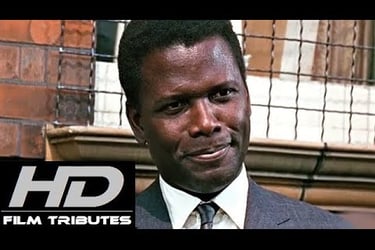
“To Sir With Love” was first a book, based on the writer’s own teaching experience, that was then made into a movie. And this song (called a “title track” because it has the same name as the movie title) was written for the movie. It comes at the end when the students have their graduation dance. One of the students (played by Lulu in the movie) sings it to the teacher.
Language point: In British schools, students traditionally called male teachers Sir. Female teachers were usually called Ma’am or Miss.
Interesting fact: The original book included a love story between a Black male teacher and a White female teacher, but the film removed this part. So this is a song about respect and gratitude to the teacher, not romantic love.
13. I Heard It Through the Grapevine (1968) – Marvin Gaye
Country: United States. Style: Soul
This is another cover version. The first versions were by The Miracles (1966) and Gladys Knight and the Pips (1967). In the song, the singer learns that his girlfriend is leaving him, but he does not hear the news directly. Someone tells him the rumour.
Language point: “To hear something through the grapevine” means to hear a rumour, not a fact. The expression comes from old telephone wires hanging between poles – people thought they looked like grapevines.
Interesting fact: There are many, many versions of this song. There is even a Spotify playlist called 100 Versions: I Heard It Through the Grapevine where you can listen to a hundred different versions of the song!
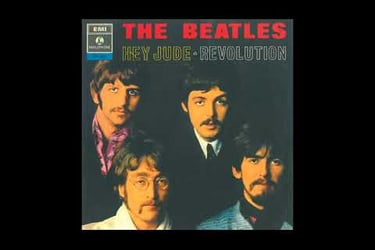
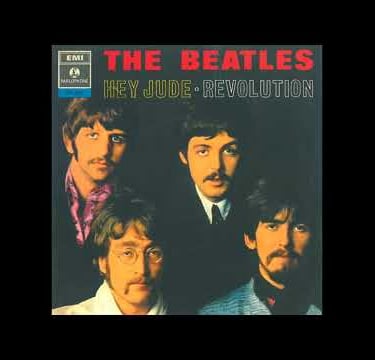
14. Hey Jude (1968) – The Beatles
Country: United Kingdom. Style: Pop ballad
This is probably the Beatles biggest hit. Paul McCartney first wrote it as “Hey Jules” for John Lennon’s young son Julian, who was upset because his parents were getting divorced. The song encourages him to feel better and to “take a sad song and make it better”.
Language point: In the song there are several examples of the common construction “Don’t + verb”. This is called the Negative Imperative and is used for orders, requests and warnings. “Don’t make it bad”, “Don’t be afraid”, “Don’t carry the world on your shoulders”. Also in the song is the construction “Don’t you + verb”, which here is not a negative imperative but a negative question, “And don’t you know…?”
Interesting fact: The song is more than seven minutes long, including a four-minute ending (“na-na-na” section). At the time, it was the longest song to reach number one.
15. The Real Thing (1969) – Russell Morris
Country: Australia. Style: Pop / psychedelic rock
This is one of the most popular Australian songs of the 1960s. In the 1960s Coca-Cola had a slogan, “The Real Thing”. A slogan is a a short phrase that helps people remember a brand or product. For example, “Just do it” is a famous slogan for Nike. Many English learners might think, “But what does “the real thing” mean?” The answer is, “It doesn’t really mean anything, it just sounds good”, and this song makes fun of how advertisers use slogans that don’t mean anything.
The Real Thing is a good example of psychedelic music, which is music that sounds “dreamy” and usual, uses echoes, strange effects and long instrumental sections.
Language point: “Come and” + verb is an interesting structure. In English we often use it in the imperative tense, to make an order or a request softer, more informal, more welcoming. For example, “Come and help me move this”, sounds softer/nicer than “Help me move this”.
Interesting fact: At the time, this was the most expensive Australian song ever made, and you can hear how professional and modern it sounds. It is also one of the earliest songs to use samples from other recordings.
16. Space Oddity (1969) – David Bowie
Country: United Kingdom. Style: Pop / rock
In the late 1960s, everyone was talking about space. The film 2001: A Space Odyssey had come out the year before, and the Moon landing was about to happen. The song has two speakers: Ground Control, the people on Earth talking to the astronaut, and Major Tom, the astronaut in the spacecraft. At first the mission is successful, but later Ground Control loses contact with him.
Language point: “Oddity” means something strange or unusual. The title Space Oddity is also a pun (that is, the words sound similar) on the movie title 2001: A Space Odyssey.
Interesting fact: The song was planned to be released before the 1969 Moon landing. However, the British broadcaster, the BBC, refused to play the song until the real space mission was successful (unlike the tragic mission in the song).
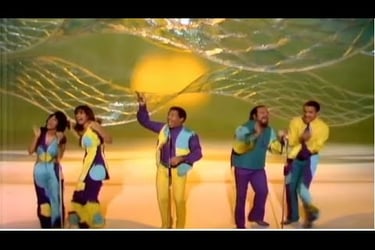
17. Age of Aquarius/Let the Sunshine In (1969) – The Fifth Dimension
Country: United States. Style: Funk
Two songs for the price of one! This track is actually two songs joined together. They come from the very popular Broadway musical Hair. The musical protested the Vietnam War and encouraged the “hippy” ideas of peace, love, and freedom.
Language point: The Age of Aquarius is an astrological idea. It says the world changes every 2,000+ years based on zodiac signs. The Age of Aquarius is linked with peace and love – but astrologers disagree about when it begins.
Interesting fact: One singer from The Fifth Dimension accidentally left his wallet in a taxi. The man who returned it worked on the musical Hair. He invited him to the show, and the band loved the music so much that they immediately decided to record this song.
FAQs: Learning English with Songs
Can I learn English with songs?
Yes, you can improve your English by listening to songs! Songs are a fun and effective way to learn English because they help you remember vocabulary, improve listening, and hear natural pronunciation and rhythm. They can also help you notice grammar in a real context, not just in textbooks. If you use songs regularly, they can become a very useful part of your English learning through music routine.
How should I use 1960s songs to learn English?
First, listen without reading the lyrics so you can focus on the sound and try to catch the main idea. Then read the lyrics, look up important new words, and notice any useful phrases, grammar patterns, or repeated expressions. Finally, listen again, sing along if you want, and try to copy the pronunciation, stress, and rhythm. This is a simple but powerful way to learn English with songs.
What are the best 1960s songs for English learners?
There is no single best answer, because the best song is usually one you enjoy and want to hear more than once. For English learners, catchy songs are often a great choice because they are easy to remember and usually have clear repeated words or phrases. The best 1960s songs for English learners are songs you can use as a mini lesson: look at the vocabulary, notice the grammar, and copy the pronunciation of words and phrases you do not know. In that way, every song becomes a small lesson in English vocabulary, grammar and listening practice.
Should I read the lyrics when learning English with songs?
Yes, but not at first. It is usually better to listen once or twice before reading the lyrics, because this trains your ears and helps you practise real listening. After that, reading the lyrics can help you understand difficult words, grammar, and pronunciation more clearly. This method is especially useful when you learn English with songs because it combines listening, reading, and vocabulary study.
Final Thoughts: Learn English with Music
Music is one of the most enjoyable and natural ways to learn English. Listening to songs from the 1960s is a very effective kind of practice. Choose a song you like, listen to it a few times, and focus on small parts of the lyrics. Even learning just a few new expressions from each song can make a big difference.
I hope you learned a few new expressions, or even discovered a new favourite song! You can subscribe to this website if you’d like extra vocabulary and exercises on 1960s songs to help you learn English with music.