York, England — A Historic City Guide for English Learners
Explore York's Roman walls, Viking history, medieval streets and famous cathedral. An English reading and vocabulary guide for intermediate learners..
TRAVEL
4/24/20267 min read
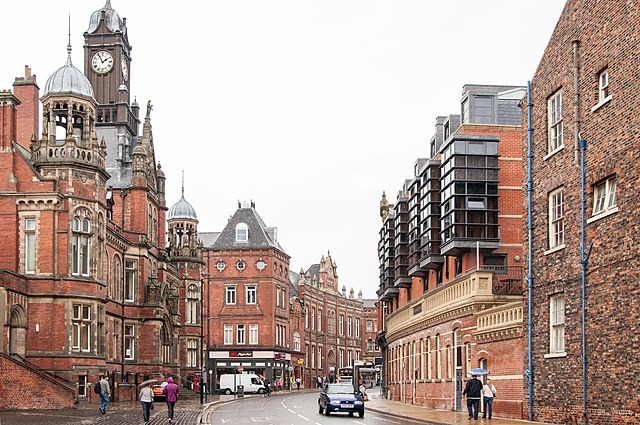
York is a historic city in the north of England and a popular travel destination for visitors. The city is about 280 kilometres north of London, and only about two hours away by train– so it’s perfect for a day trip. It has a population of around 200,000 people and is known for its long history, beautiful old buildings, including its famous cathedral, York Minster, narrow medieval streets and old city walls. This York, England travel guide is for English learners who want to explore a historic English city while improving their language skills.
Historic York, England is special because many parts of the city still look the same as they did hundreds of years ago. Visitors can walk on ancient city walls, explore narrow streets, and learn about different periods of English history—all in one place. It is a popular destination for tourists and history lovers, especially as York is a convenient day trip from London. Visitors say York feels like a journey back in time.
A Brief History of York, England
York has a very long history. The Romans built the city almost 2,000 years ago in the year 71 AD and called it Eboracum. A Roman fortress stood there, and Roman soldiers lived in the city. They built strong walls to protect the city, and parts of these walls still exist today. Even parts of the fortress are still there, for example a tower in the Museum Gardens.
The Romans left York and Britain around 400AD. A few centuries later, the Vikings arrived in 866AD. They named it Jorvik, and it became an important Viking trading center. The city was especially famous for wool and jewellery.
Over time the name Jorvik was shortened to York. In the Middle Ages, York became one of the most important cities in England, including an important religious city. Traders and craftsmen lived inside the city walls, and many churches and buildings were built. One of the most famous buildings from this time is York Minster, a large cathedral that took 250 years to build.
Later, during different wars and changes in power, York became less important as other large cities grew in northern England. In the 19th century another industry grew in York – chocolate!
Top Places to Visit in York
York Minster
York, England. Photo by Bo&Ko, Wikimedia Commons (CC BY-SA 2.0)
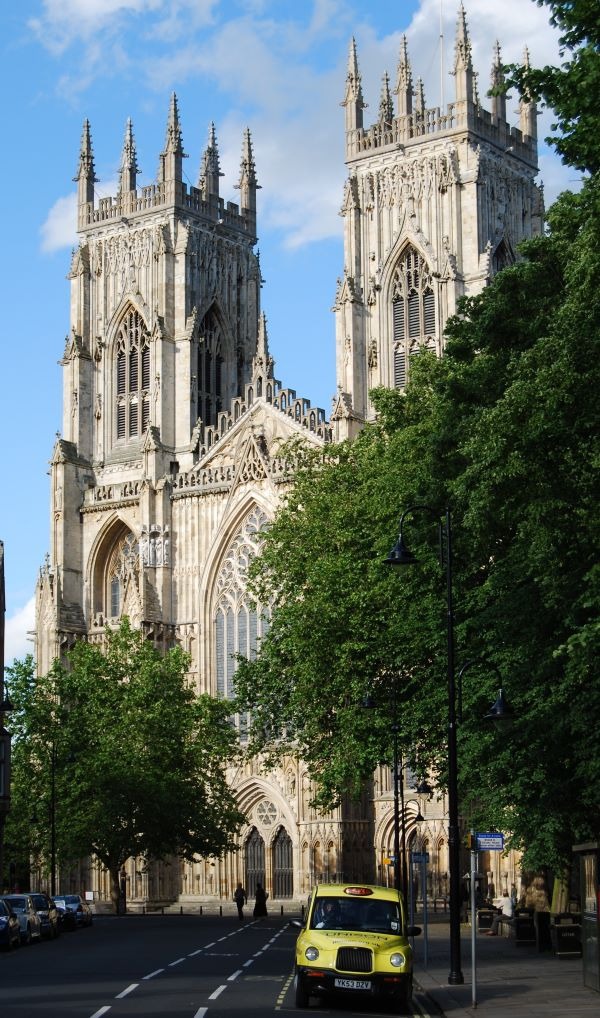
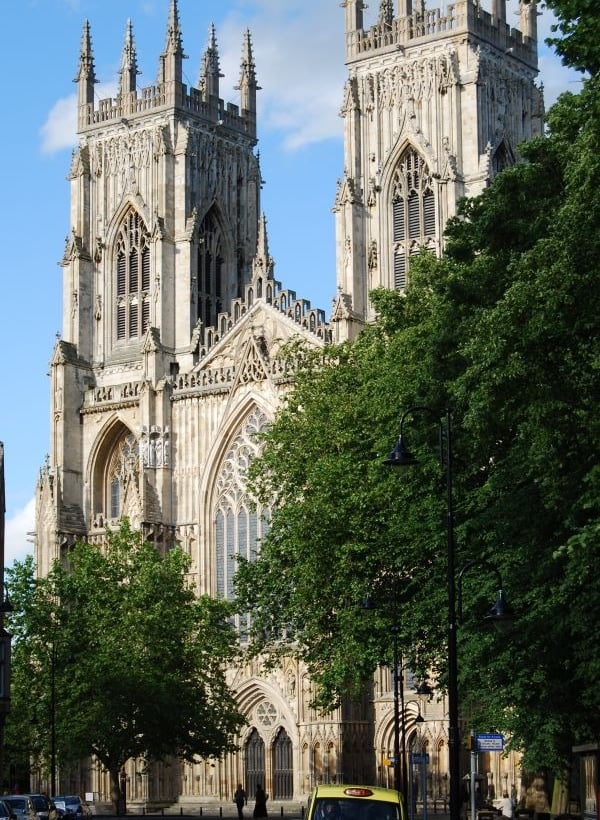
One of the most famous buildings in York is York Minster, a huge Gothic cathedral and one of the largest cathedrals in Northern Europe. It is famous for its beautiful stained-glass windows and tall towers.
The cathedral is located in the centre of the city. Visitors can climb the tower for a great view of the city. Inside, the building is quiet and impressive.
Photo by Adrega, courtesy of Pixabay
The Shambles
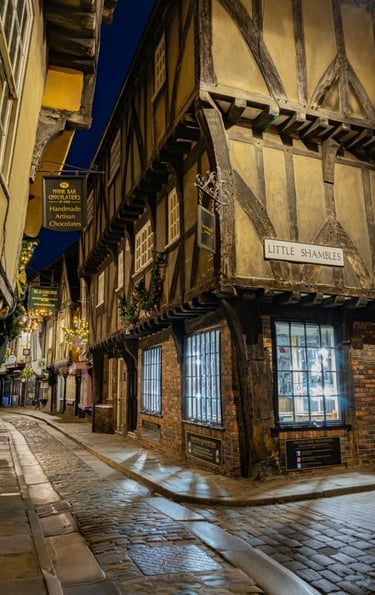
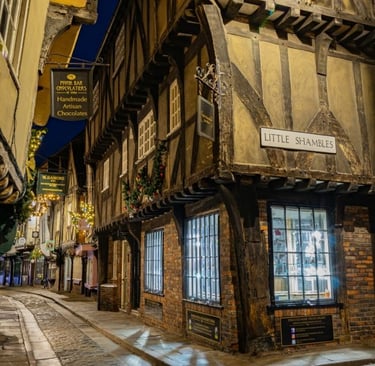
The Shambles is one of the most famous streets in England. It is a narrow medieval street with old timber (wooden) houses that lean over the road.
Hundreds of years ago, butchers sold meat there. Today the street is full of cafés and small shops selling gifts, sweets, crafts and souvenirs. It’s also a great place to take photos!
Photo by Karl Moran, courtesy of Unsplash
The City Walls
York’s city walls are well-preserved and are the longest city walls still standing in England. Most of the current walls were built in the Middle Ages, but you can see some of the original Roman city walls. The walls are a great way to explore the city. You can walk all the way around the old city, which takes about two hours. From the walls, you can see historic buildings, gardens, and modern streets.
Jorvik Viking Centre
The Jorvik Viking Centre is a popular museum about Viking life. It stands on the site of a real Viking settlement. Visitors can see how Vikings lived, worked, and traded in the city more than 1,000 years ago. The highlight is a 15-minute ride through a faithfully re-created Viking village, using sounds, models, and even smells, to bring the past to life.
National Railway Museum
This free museum is not just for train enthusiasts, but is very popular with families too. It shows the history of trains in Britain, including old steam engines and royal trains. It has over 100 trains on display, including the world’s fastest steam train. It even has a Japanese bullet train that you can explore, as well as Virtual Reality tours and model train sets.
York Today — Food, Festivals and Daily Life
Today, York feels both traditional and modern. The city centre is often busy with tourists, street performers, and students who study at the University of York. There are cafés, markets, English pubs (over 200, old and modern!), and restaurants. You can try the famous Yorkshire pudding which is often eaten with roast beef. Away from the busy city centre, York also has quiet areas near the river and parks, and nature reserves close by like Ashkam Bog and St Nicholas Fields.


Photo by Andy Kennedy on Unsplash
York has festivals throughout the year, such as the two-week York Festival in September-October, the York Motor Show, and every December, the Christmas Market fills the city centre with lights, music, and warm food....
Fun Facts about York
York is known as one of the most haunted cities in Europe. This is because of York’s long and violent history that includes Roman and Viking invasions, wars and plagues. Many people believe ghosts live in old buildings such as the Golden Fleece pub and the Treasurer’s House (there have been sightings of Roman ghost soldiers in the basement. Today York celebrates its ghost history with regular ghost tours at night, an annual ghost festival, and even a ghost shop that sells hand-crafted ghosts. Just be prepared to queue for a long time to get into the ghost shop!
Many Harry Potter fans (sometimes known as Potterheads!) visit The Shambles because they believe it inspired Diagon Alley in the stories. However, the Harry Potter writer, J.K Rowling, has said this is not the case as she has never visited York. Nevertheless you will still find lots of shops selling Harry Potter souvenirs in The Shambles.
York once had 365 pubs, or one for each day of the year! This might however be just a myth (a story that is not true), and today there are only around 230, including about 90 in the city centre. It still means York has more pubs per square mile than most English cities.
York is home to famous chocolate companies like Terry’s and Rowntree’s. Have you ever eaten a Kit-Kat? The Kit-Kat was born in York! Chocolate comes from the cocoa plant which normally only grows in tropical regions where the weather is hot and wet. However, the Rowntree's factory in York successfully grew some cocoa, enough to make just one small chocolate bar. They then gave the chocolate to Queen Elizabeth II. This was in 1932, when she wasn’t yet Queen of England – she was a 6-year-old princess.
FAQs
Is York worth visiting?
Yes, York is one of the most popular historic cities in England, with many attractions and beautiful old streets. It has some excellent museums and picturesque English countryside nearby. It is also very convenient to get to, by car or by train. Walking around York is like taking a trip back to the past.
What is York famous for?
York is famous for York Minster, its medieval walls, the Shambles, and its long history from Roman and Viking times. It is also famous for its chocolate – it is home to Rowntree’s and the famous Kit Kat brand – and claims to be one of the most haunted cities in the world.
How far is York from London?
York is about 280 kilometres from London and takes around two hours by train. That makes it a very convenient and enjoyable day trip from London.
Did The Shambles inspire Harry Potter?
Unfortunately, this seems to be an urban myth. An urban myth is a recent story or “fact” that some people think is true, but isn’t. The author of the Harry Potter series, J.K. Rowling, has never visited York. However, there is still a connection between York and Harry Potter. In the movie, Harry Potter and the Philosopher’s Stone, one of the scenes was filmed at York Railway Station.
English Vocabulary – Key Words in This Article
Destination – a place where people travel to.
Example: Paris is a popular tourist destination.
Cathedral – a very large and important church.
Example: York Minster is a famous cathedral.
Medieval – from the Middle Ages (about 500–1500 AD).
Example: York has many medieval streets.
Fortress – a strong building built to protect people from attack.
Example: Soldiers stayed inside the fortress.
Vikings – people from Scandinavia who travelled and traded in Europe about 1,000 years ago.
Example: The Vikings arrived in England in the 9th Century.
Trader – a person who buys and sells goods.
Example: The trader sold food and clothes in the market.
Gothic – a style of architecture with tall buildings and pointed arches, common in old churches.
Example: The cathedral is built in the Gothic style.
Well-preserved – kept in good condition and not damaged by time.
Example: The old castle is well-preserved.
Settlement – a place where people first start to live.
Example: The Vikings built a settlement near the river.
Faithfully re-created – made again very carefully so it looks like the original.
Example: The old village was faithfully re-created in the museum.
Enthusiast – a person who is very interested in something.
Example: He is a history enthusiast.
Pub – a bar, a place where people go to drink and relax, (especially common in the UK and Australia).
Example: We met our friends at the pub.
Pudding – a type of food in the UK, usually sweet but sometimes savoury, and most often eaten at the end of a meal as a dessert, but sometimes as part of a main dish.
Example: We had chocolate pudding for dessert.
Haunted – believed to have ghosts.
The children were scared to enter the house because they thought it was haunted.
Plague – a serious disease that spreads quickly and kills many people.
Example: Many people died during the plague.
Enjoying learning English through culture? Read our article on 17 Great Songs from the 1960s. Subscribe to receive extra exercises and learning materials for this article, so you can practise and improve your English step by step.