Why Did UK Prime Minister Keir Starmer Resign? Understanding Britain's Political System
Why did UK Prime Minister Keir Starmer resign? Improve your English while learning about British politics, current events and the UK's political system.
CURRENT EVENTS
7/9/20268 min read
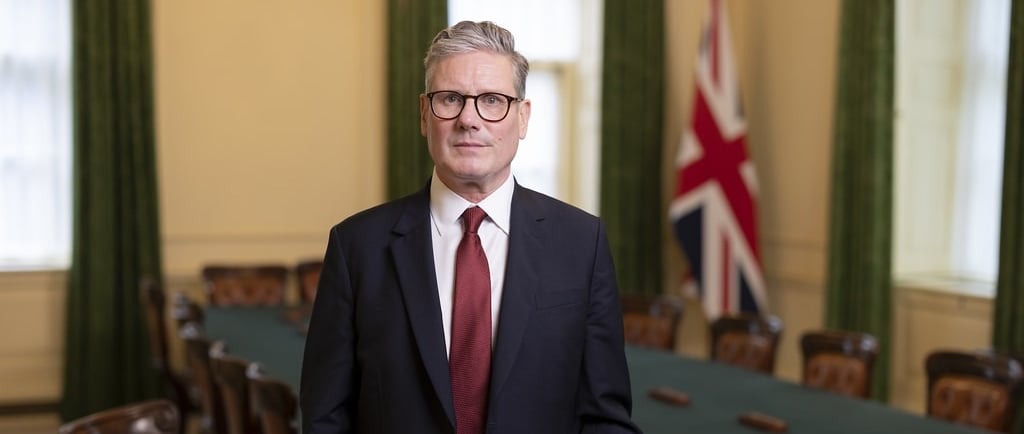
Upper-Intermediate English Reading Practice: Learn about British politics through a real news story.
This article is the second in my series on current events, written for upper intermediate to advanced English learners. The first article was on the rise of Far Right political parties in English-speaking countries.
Reading about real-world events is one of the best ways to improve your vocabulary, understand natural English, and become a more confident reader. It is also one of the best ways to move beyond the English Intermediate level and reach a higher Advanced level. To further help you I've added definitions for some words and phrases (in bold) at the end of the article.
What Happened? Keir Starmer's Resignation Explained
Last month (22 June) the British Prime Minister, Sir Keir Starmer, resigned as both Prime Minister and leader of the Labour Party. He currently remains as caretaker leader until the Labour Party votes for a new leader.
Starmer was Prime Minister for just 18 months, from July 2024 when the Labour Party won a landslide victory in the last general election. The next Prime Minister, expected to be the newly elected Andy Burnham, will be the United Kingdom’s seventh Prime Minister in just ten years. In contrast, in the previous 35 years (1980 to 2015) Britain only had five Prime Ministers.
Who Is Keir Starmer? A Quick Introduction
UK Prime Minister, Sir Keir Starmer, who recently announced his resignation
Creator: Number 10 | Credit: Simon Dawson / No 10 Downing Str. Copyright: Crown copyright. Licensed under the Open Government Licence
Before becoming a politician, Keir Starmer was a lawyer who worked mainly on human rights cases. For five years he was Director of Public Prosecutions, the person responsible for deciding which serious criminal cases should be taken to court. In 2014 he was knighted for his services to law and criminal justice, that is, he could now be called Sir Keir Starmer.
After completing his 5-year term as Director of Public Prosecutions he entered politics, running for election in 2015. He was elected to Parliament, and in 2020 he was elected Leader of the Opposition. Four and a half years later he led Labour to victory in the 2024 general election.
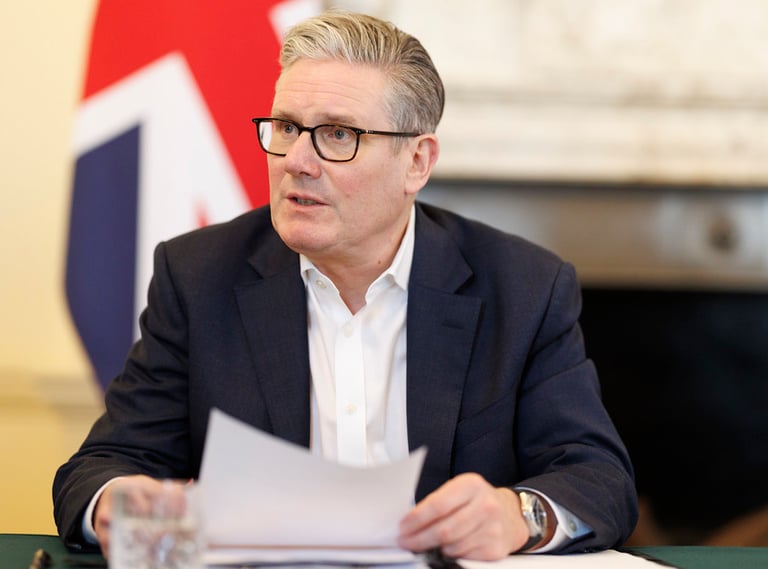
Sir Keir Starmer prepares to make an announcement
Creator: Number 10 | Credit: Simon Dawson / No 10 Downing Str. Copyright: Crown copyright. Licensed under the Open Government Licence
Why Did Keir Starmer Resign as UK Prime Minister?
Despite leading the Labour Party to one of its best election wins, Starmer was never very popular with the public. Many political experts believe the Labour Party won mainly because the Conservative government they defeated was even more unpopular. When Starmer was first elected Prime Minister his approval rating was just over 50 percent. But only months later it dropped dramatically when his Government decided to cut the winter fuel allowance for pensioners, meaning their heating bills would become more expensive. By January 2026 his approval rating was only 18 percent, and has remained very low up to his resignation.
The main reason for his unpopularity was because of growing cost-of-living pressures for most British people. He also was unpopular because on several occasions he changed his mind on important policies (often called policy reversals). Before the election he had promised not to increase taxes but broke that promise. He proposed cutting welfare benefits and had to change his mind when even his own Party went against him. He also broke promises to make universities free and to nationalise utilities like electricity, gas and water.
The Labour Party performed badly in a series of local council elections in 2025 and 2026. Members of his own Cabinet, worried about Starmer’s unpopular policies, started resigning. Four Ministers resigned on 12 May, then the Health Secretary resigned two days later. More Ministers resigned in June, including the Defence Secretary.
The final straw for Starmer came on 18 June, when a by-election was held for a seat in Manchester. The by-election happened because the sitting (ie current) Labour Member of Parliament (MP) resigned. He did so for the sole purpose of allowing Manchester’s popular mayor, Andy Burnham, to run for the seat. The plan was for Burnham to enter Parliament and challenge Starmer for the party leadership. Because Burnham is far more popular with the public than Starmer, many within the Labour Party believed he would be their best chance of winning the next general election. Burnham won the by-election easily, and Starmer resigned just three days later.
How Does the United Kingdom Choose a New Prime Minister?
Many people think that because Keir Starmer has announced his resignation, the Government will change. However that is not the case. The Labour Party will continue to be the government, but with a different Prime Minister. Unlike a presidential system, as in the United States or France, the public doesn’t directly vote for the leader of the country.
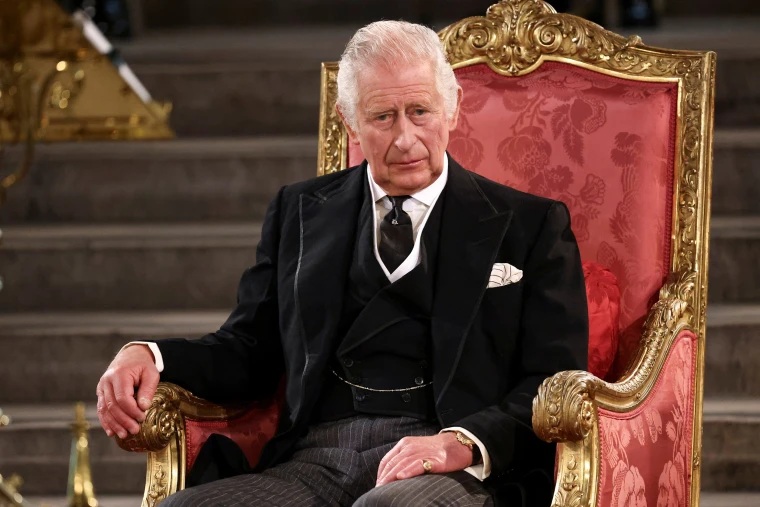
Normally Prime Ministers change when a government loses a general election. The Prime Minister will then make a statement acknowledging that the Government has been defeated, and notifies the Monarch (King Charles, or previously, Queen Elizabeth). Almost immediately afterwards, the leader of the winning Party goes to the Royal Palace and the Monarch invites them to form a new Government. The leader of the winning Party then becomes Prime Minister.
The UK monarch, King Charles III, appoints a Prime Minister by inviting him or her to lead the government. However the monarch does not choose the Prime Minister.
Sometimes there is no clear winner after an election, that is, no Party has a 51 percent or higher majority of seats (known as a ‘clear majority’) in the Parliament. This is called a hung parliament, meaning no political party has enough seats to govern on its own. In this case, the old Prime Minister and his/her Party remain in power, while political parties negotiate with each other and independent candidates in order to form a coalition government.
If a Prime Minister resigns, as has happened with Sir Keir Starmer, the process is different. There is no need to call a general election, as the Party in government still holds a clear majority. Instead they just need to pick a new leader. Each Party has its own way of picking a new leader. For the Labour Party, their rules require that leadership candidates have to have a minimum percentage of support from fellow Labour Members of Parliament and also from some related organisations, such as some trade unions. If there is more than one candidate running for leadership, then a vote is taken which is open to Party members (not just Members of Parliament) and some outside organisations like trade unions. When the party selects its new leader, the Monarch then meets the incoming leader and officially appoints him or her.
In Sir Keir Starmer’s case, the Labour Party will open nominations for leadership candidates. If there is only one eligible candidate after nominations close in mid-July, then the candidate will be announced as new leader. Otherwise there will be a vote in August, and the results of that vote announced at the end of August.
Why has the United Kingdom had so many Prime Ministers recently?
The United Kingdom is well-known for its political stability, in comparison to other countries. However, in times of uncertainty, this stability can disappear. For example, in the 1970s when the UK experienced high inflation and mass unemployment, it had four different Prime Ministers in just over 5 years. It is no coincidence that as British people worry about cost of living pressures, rising housing prices and uncertainty over future employment, politics has become unstable again.
Added to this has been the fall in support for the two traditional major parties, Labour and Conservatives. There has been increased support for more extreme parties (see my blog article on the Rise of the Far Right), and for Independent candidates. Worried that they will lose more votes to newer parties and independents, both the Labour and Conservative Parties have been more willing to change leaders for someone more popular.
In the past, many British people voted mainly for a political party rather than for its leader. Today, television, social media and opinion polls mean that party leaders receive much more attention than before. Now Prime Ministers are often judged by how popular they are rather than how competent they are, and the newspapers and media constantly publish polls measuring leaders’ popularity.
The British media, especially British tabloids, could be another reason why Prime Ministers are not lasting as long as before. The tabloids love to create drama, conflict and outrage to get more people to read their articles. A good example is Boris Johnson – the tabloids loved reporting on all the scandals around his leadership. They also made fun of Liz Truss’ chaotic period as Prime Minister, causing her to lose the trust of voters.
What Could Happen Next in British Politics?
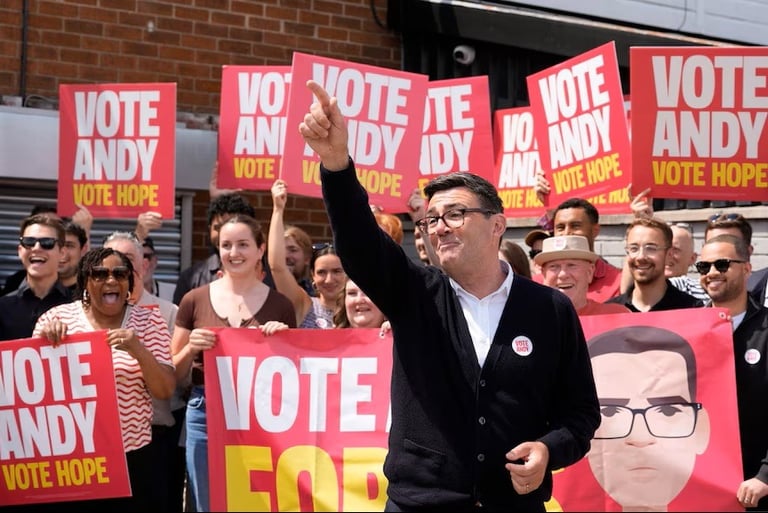
If Andy Burnham becomes the new Prime Minister, as is expected, then he could change the direction of Britain’s current economic and political situation. Burnham is believed to be more left-wing than Sir Keir Starmer. Therefore he may introduce some policies that provide greater assistance to people suffering from cost of living pressures. In the past he has argued for even bigger policy changes, including the nationalisation or greater government control of utilities and the railways. He has even argued for the replacement of Britain’s House of Lords. The British Parliament has two “houses” or groups – the House of Commons (elected by the general public in an election) and the House of Lords (whose members are not elected but appointed). Removing or replacing the House of Lords would be a massive change to the United Kingdom’s political system.
The new Prime Minister will also probably make some changes to his (or her) Cabinet of Ministers. And if the appointment of a new Prime Minister increases the popularity of the Labour Party with voters, then it’s also possible that the Prime Minister might call an early election to take advantage of the renewed popularity (the next election isn’t due until 2029, but a Government can call an election whenever it wants before then).
Andy Burnham with his Labour Party supporters during the recent Manchester by-election.
Frequently Asked Questions
Why did Keir Starmer resign?
He resigned after months of poor opinion polls, disagreements within the Labour Party, and growing public dissatisfaction with his government.
Will Britain have another general election?
Not necessarily. A new Prime Minister can take office without a general election if the governing party still has enough Members of Parliament.
How long was Keir Starmer Prime Minister?
He served as Prime Minister for about 18 months after Labour won the 2024 general election.
Does the King choose the Prime Minister?
No. The leader of the political party that can command a majority in the Lower House of Parliament becomes Prime Minister. This person is almost always the leader of the political party with the most seats. While the King formally appoints the Prime Minister, he does not choose them. The leader is elected by his or her own political party's members and MPs.
Useful Vocabulary
caretaker leader: a temporary leader until a new one is chosen
landslide victory: a very big election win
approval rating: the percentage of people who support or like a politician
cost-of-living pressures: rising prices that make life more expensive
policy reversal: changing a government decision or promise
to nationalise: to bring a company or industry under government ownership
Cabinet: the group of senior government ministers
the final straw: the last problem that causes someone to act or to give up
by-election: an election held to replace one member of parliament between general elections
seat: the area represented by one elected politician, or the position itself
to acknowledge: to accept or admit that something is true
coalition government: a government formed by two or more political parties
candidate: someone standing in an election
eligible: allowed to do something because you meet the rules
It is no coincidence: these things are probably connected
tabloid: a newspaper known for short news stories, dramatic headlines and celebrity news
scandal: behaviour that shocks people or causes public anger