The Rise of Far-Right Parties in English-Speaking Countries
Why are far-right parties growing in Australia, the UK and the US? Read our current events article — written for intermediate and advanced English learners.
CURRENT EVENTSADVANCED LEARNERS
5/17/20268 min read


My post content
Anti-immigration protestors clash with police in South Yorkshire, UK. Photo by Danny Lawson/PA
This article is part of a regular series on current events, written for upper intermediate to advanced English learners. One of the best ways to improve your English is to read regularly about real-world topics. Reading builds your vocabulary, your understanding of grammar, and your ability to recognise natural expressions. Many learners reach an intermediate level and then feel their progress slows down — reading widely is one of the best ways to move beyond that stage.
Introduction
On 9 May 2026, a far right-wing party, One Nation, won a seat in Australia’s Federal lower house (the House of Representatives). This is the first time a One Nation candidate has been elected to the House of Representatives in Canberra. This follows a trend of far right wing parties becoming increasingly popular in Western countries, including the English-speaking countries like the United States and the United Kingdom.
Supporters say these parties are responding to people’s concerns about immigration, housing, jobs, and the cost of living. Critics, however, worry about growing political division, racism, and attacks on multiculturalism. Understanding these political changes is important for anyone interested in modern English-speaking societies.
Who Is One Nation?
The One Nation party was founded almost 30 years ago by Pauline Hanson, a former fish-and-chip shop owner who decided to enter politics. In the 1996 federal election, she stood as the Liberal Party candidate for a Queensland seat that was considered safe for the Labor Party — meaning Labor was widely expected to win it easily. During the election campaign, Hanson made controversial comments criticising Asian immigration and calling for cuts to programs designed to help Indigenous Australians. There was an outcry in the media about her views which were considered racist, and the Liberal Party removed her as their official candidate. However, because voting papers had already been printed with her name, Hanson continued to be the Liberal Party candidate. In an unexpected result, Hanson won the seat. In a major upset (unexpected result), Hanson won the seat. As she was no longer a Liberal Party member she created her own Party and called it One Nation.
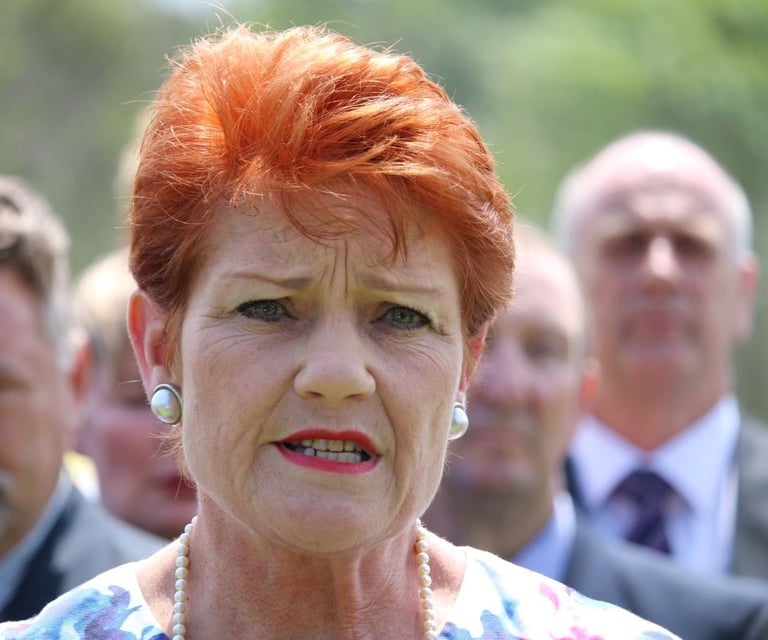
For most of its history, One Nation has been a minor party, rarely receiving more than 5% of the vote. That changed significantly in 2026, when the party received 40% of the vote in the Farrer by-election — a special election held to fill a seat that had become vacant before the next general election — and went on to win its first ever seat in the House of Representatives.
One Nation's key policies include reducing immigration, opposing multiculturalism, and being critical of Islam. The party has also opposed many government programs aimed at helping Indigenous Australians, and more recently has argued against renewable energy and action on climate change.
Far-Right Politics in Other English-Speaking Countries
The United Kingdom
In the United Kingdom, the main far-right party is Reform UK, led by Nigel Farage. It began in 2018 as the Brexit Party, whose central goal was for the UK to leave the European Union. ('Brexit' is a word created by combining 'Britain' and 'exit'.) When the COVID-19 pandemic began, the party shifted its focus to opposing lockdowns. It was renamed Reform UK in 2021 and has steadily grown since then. It is now the largest political party in the UK by number of members.
The United States
The United States does not have a major far-right third party. However the rise of Donald Trump within the Republican Party has attracted stronger nationalist and populist support to the party. Trump’s political style, criticism of immigration, and “America First” message have influenced political movements in other countries as well.
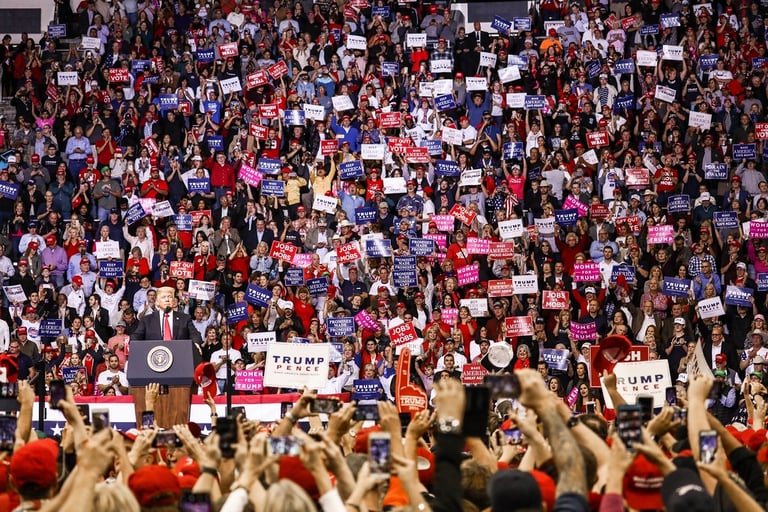
President Donald Tump at a Make America Great Again rally in Texas, USA, 2018. Photo by Charlotte Cuthbertson/The Epoch Times
Canada and New Zealand
Far-right parties in Canada and New Zealand have not achieved the same level of success as in some other countries. However, Canada’s 2022 Freedom Convoy — a protest movement opposed to COVID-19 vaccination requirements and restrictions — showed that many people were frustrated with governments and searching for alternative political movements.
In New Zealand, the conservative New Zealand National Party formed government in 2023 with support from ACT New Zealand and New Zealand First, two smaller parties further to the political right.
Why Are Far-Right Parties Becoming More Popular?
Immigration and Housing Pressures
Most far-right parties make opposition to immigration a central part of their message. English-speaking countries such as the United States, Canada, and Australia have accepted large numbers of immigrants over many decades. Even in the United Kingdom, around 15% of the population was born in another country. Immigration has brought many benefits, including economic growth and a larger workforce. Governments in these countries have generally supported high immigration because it has helped their economies expand and raised the overall standard of living.
However, more people arriving in a country also requires more infrastructure — hospitals, housing, roads, schools, and public transport. Many governments failed to invest enough in these areas to keep up with population growth. As a result, roads and public transport became more congested, waiting times for healthcare grew longer, and — most significantly — housing became increasingly unaffordable. Many people began to feel that their quality of life was getting worse, and they blamed immigration for these problems. Media coverage in countries such as the United States, the United Kingdom, and Australia sometimes reinforced this view, presenting immigration as a cause of crime or security concerns.
Disappointment With Traditional Parties
Another factor is many people have become disillusioned with the major political parties. In most English-speaking countries, power has long been shared between two dominant parties. In the United States, the Republicans and Democrats have supplied every president since the 1850s. In the United Kingdom, either the Conservative Party or the Labour Party has provided every prime minister for more than a century. Similar patterns exist in Canada, New Zealand, and Australia. Many voters have grown tired of this arrangement, feeling that the major parties have run out of new ideas and are no longer addressing their concerns. This has led people to look for alternatives.
The Influence of Social Media
Social media has also played a significant role. More and more people get their news from social media rather than from traditional outlets such as newspapers, radio, and television. Far-right content tends to perform well on social media platforms. Researchers have also found that some authoritarian governments deliberately use social media to spread divisive content in democratic countries, aiming to weaken trust in institutions and encourage political conflict. (See: Santa Clara University Ethics Centre — Weaponisation of Social Media by Authoritarian States and Journal of Democracy — The World Has Become Flatter for Authoritarian Regimes)
Financial Support From Wealthy Donors
Finally, far-right parties and candidates often benefit from financial backing. In Australia, One Nation is funded by one of Australia’s richest persons, billionaire mining magnate Gina Rinehart.. In the United Kingdom, Reform UK has relied heavily on a small number of very wealthy donors. Its largest single backer is Christopher Harborne, a British-Thai billionaire who has contributed more than £22 million to the party — reportedly the largest individual donation to a UK political party in history. (See: Al Jazeera — How Far-Right Reform UK Built a Global Network.) In the United States, Donald Trump's presidential campaign received major financial support from billionaires including Elon Musk.
Having more financial support means that far right parties can pay for more advertising and marketing campaigns to spread their message.
What Could This Mean for the Future?
There is no guarantee that far-right parties will form governments in countries like Australia or the United Kingdom. However, mainstream parties are already changing some of their policies in response to the rise of these movements, especially on immigration. Both the UK Labour government and the Australian Labor government have announced plans to reduce immigration numbers and tighten visa requirements.
Reduced Immigration to English-speaking Countries
Immigration has played a significant part in the economic growth of English-speaking countries, especially those with smaller populations such as Australia, New Zealand, and Canada. If immigration is significantly reduced, could this lead to slower economic growth? This question becomes more pressing when combined with the expected impact of artificial intelligence (AI) on employment, which could reduce the number of jobs available in many industries.
Could Political Change Affect English Learners?
Many people around the world learn English because they hope to work or study in an English-speaking country, or because they see these countries as offering good opportunities. If it becomes harder to obtain a work or study visa, or if English-speaking countries come to be seen as unwelcoming to outsiders, could this reduce the demand for English as a foreign language? Could people shift their attention to learning the language of a country that seems more open or offers greater opportunities? . It’s possible that the rise of the far right in English-speaking countries will see English lose its place as the most popular language to learn. What do you think?

Growing Political Division
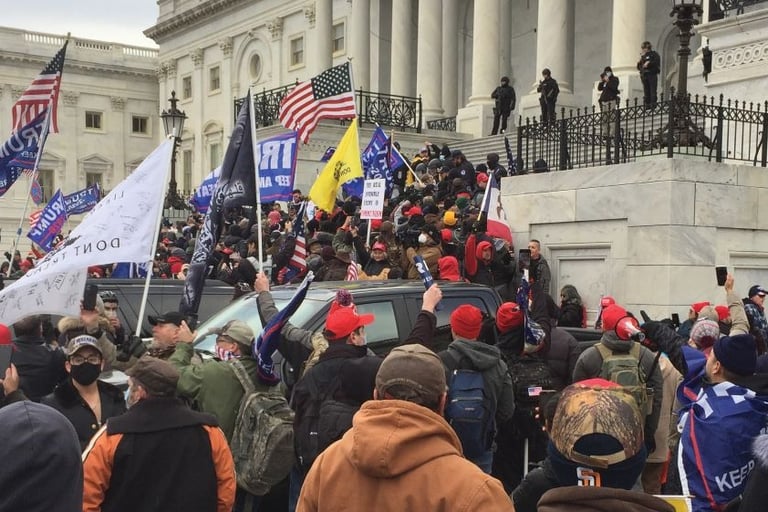
The rise of far-right parties is also increasing social division within these societies. In the past, most people were not troubled by how others voted, and political discussions — even between people with different views — were generally calm and respectful. Today, because far-right parties hold more extreme positions, including views that many consider discriminatory, it has become harder for people to accept or respect those who support them.
Donald Trump supporters attack the US Capitol building in Washington DC, January 2021. Copyright: : CC BY-SA 4.0
Political discussions — both online and in person — can quickly become very heated. Research shows this is having real effects on personal relationships: a 2025 study by the University of California found that 37% of Americans had experienced a 'political breakup', with 40% of those involving a family member. (See: University of California Irvine — New Study Finds Increase in Political Breakups)
Is Opposition to Immigration and Multicuturalism Inevitabe?
It is worth remembering that, despite the rise of these parties, the majority of people in English-speaking countries remain supportive of immigration and cultural diversity. A 2019 Pew Research Centre survey across 27 countries found that only eight were in favour of greater diversity — and four of those eight were English-speaking: Canada, the United Kingdom, the United States, and Australia. Many people in these countries hope that their governments will address people's genuine concerns about housing, healthcare, and living costs — without unfairly blaming immigrants or multiculturalism for these problems.
Useful Vocabulary
Word / Phrase Simple Definition
far right-wing: having very strong conservative or nationalist political views
seat: an elected position in parliament
candidate: a person trying to win an election
follows a trend: continues a pattern that is already happening
election campaign: organised activities, such as making speeches, giving interviews, and running advertisements, that a political party or candidate carries out in order to persuade people to vote for them.
Indigenous: relating to the original people of a country. In Australia, Indigenous Australians (also called Aboriginal and Torres Strait Islander peoples) are the original inhabitants of the continent.
outcry: a strong public reaction of anger or shock
multiculturalism: the idea that people from many different cultural, ethnic, and religious backgrounds can live together in the same country and that this variety should be celebrated and supported.
disillusioned: disappointed after losing trust or hope
authoritarian: controlling people strictly and limiting freedom
financial backing: money given by a person or organisation to support a cause, project, or political party
there is no guarantee: something may happen, but it is not certain
mainstream: widely accepted or traditional
heated: angry or emotional
cultural diversity: the presence of people from many different ethnic backgrounds and beliefs (cultures) within a community or country.
Discussion Questions
Why do you think far-right parties are becoming more popular in some countries?
What are the advantages and disadvantages of immigration?
How has social media changed political discussion?
Do you think traditional political parties still represent ordinary people well?
Should governments reduce immigration if housing and infrastructure are under pressure?
Can people with very different political opinions still be good friends?
Do you think English will remain the world’s most important international language in the future?
Note to teachers: This article is suitable for class discussion, debate exercises, or as a reading comprehension task. The discussion questions can be used in pairs, small groups, or as written tasks. The vocabulary section can also be used as a matching or gap-fill exercise.