20 Great Songs of the 1970s for English Learners
20 great 1970s songs for English learners: improve vocabulary and grammar through music, with fun facts about each hit. Free reading practice.
MUSIC
6/13/202618 min read
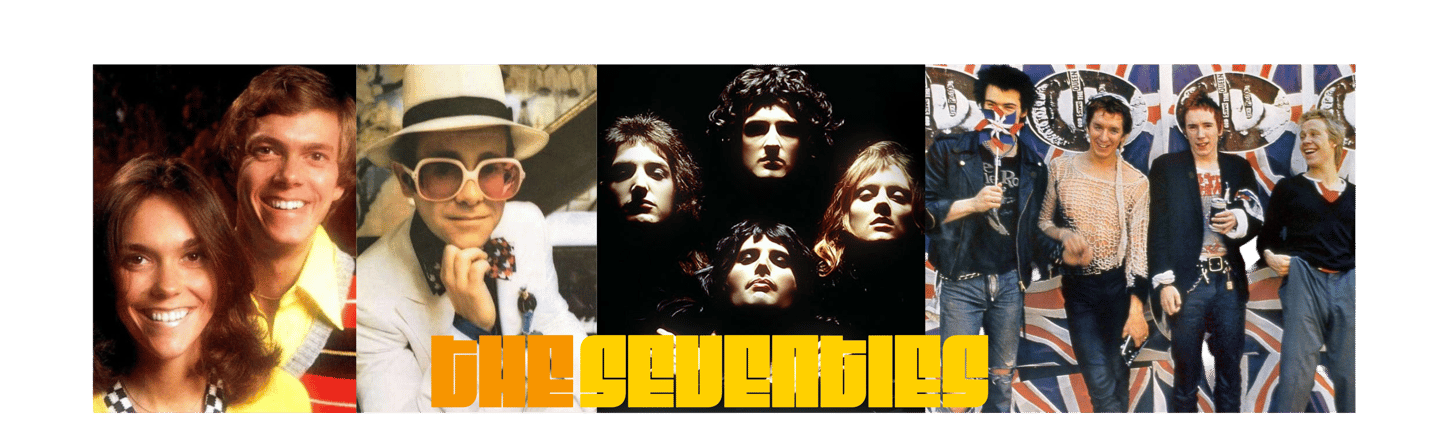

Music, Language and Culture for English Learners
Welcome to the second article in our Goldfields English Conversation Music Series!
In this series, I’ll be sharing some of the world’s most popular and memorable songs from the 1960s, 70s, 80s and up to today. The first article in the series, Learn English With 17 Great Songs of the 1960s, introduced you to the music of the Sixties. This article will take us to the next decade in music, the 1970s.
Music is a wonderful way to learn English. A song can help you:
Hear how real English sounds
Remember new words and expressions
Discover something about other countries’ culture and history
Have fun while learning!
Tips for English learners on how to use these articles
Here is some advice on how to learn English with songs. Try to read everything in English first. Don’t worry if you don’t understand every word — that’s normal. Here’s a good way to use each article:
Read the article once without stopping.
Read it again and note any words or phrases you don’t know. Words in bold have definitions at the end of the article.
DON’T look up every single word you don’t know. However, if you see a word that you’ve come across many times before without knowing the meaning, it’s a good idea to look up its meaning.
Listen to the song on YouTube and try to follow some of the lyrics.
Introduction: The Seventies
The 1970s was a great time for popular music. The 70s were a golden age of the Top 40 hit, with radio and music charts helping songs reach huge audiences. Some of the best pop songs of all time were recorded in this decade. It also marked the arrival or increased popularity of music genres like disco, punk, new wave, glam rock, reggae and heavy metal.
While musicians continued to release catchy pop songs, it was the decade when the record album, or LP (long play) record, was most popular. Previously there might have been one or two very good songs on a record, but in the 70s we saw the release of several albums that had great tracks from start to finish. Records like Rumours by Fleetwood Mac, Elton John’s Goodbye Yellow Brick Road, Meat Loaf’s Bat Out of Hell, Pink Floyd’s Dark Side of the Moon and Marvin Gaye’s What’s Going On were all big sellers when released in the 1970s, and 50 years on are now regarded as pop and rock classics.
Although the 1970s gave us many happy, carefree pop songs, it was also a time of great change in the world. The Vietnam War was still in progress, and opposition to it was growing stronger every year. There was also increasing trouble in the Middle East. In 1974, the price of oil quadrupled (that is, increased by four times or 400%), which badly affected economies around the world. By the end of the decade unemployment, especially youth unemployment, was reaching record high levels in many countries, including the United Kingdom. This helped give birth to punk rock as a protest against the politics and economics of the time.
1. I Think I Love You (1970) – The Partridge Family
Country: United States. Style: Pop
This is a song about falling in love, and all the strange feelings the singer experiences. He wakes up with a strange feeling, tries to keep it secret, but can’t keep the secret any longer. The song also captures the singer’s doubts about whether the other person loves him back.
Language point: Can you learn grammar from songs in English? It’s possible, though not really with this song because the grammar is just crazy. The first verse mixes a strange collection of tenses – ‘was sleeping’ (past imperfect), ‘wake up’ ‘go’ ‘hold’ ‘spring up’(simple present), and ‘keeps knocking’ (present continuous). The second verse describes events that happen after the first, but now it switches almost entirely to past simple – ‘woke up’, ‘didn’t know’, ‘decided’ and so on. It’s not exactly logical grammar – but perhaps that’s the point, showing the singer’s confusion!
Interesting fact: The Partridge Family was a band created especially for television. The Partridge Family was a popular sitcom from 1970 to 1974, about a fictional pop band where the members were all from the same family. (In real life none of the cast members were related, and on this song only two ‘family members’ played on the recording.)


2. Father and Son (1970) – Cat Stevens
Country: United Kingdom. Style: Folk pop
Just as the title suggests, this song is a dialogue between a father and his son. The father gives conservative, traditional advice. The son, however, feels that his father doesn’t really listen to him. The son wants to leave home to follow his own path in life. The song is about the “generation gap” between older and younger people.
Language point: Because the father is giving advice, there’s lots of use of the imperative: “take it easy”, “settle down”, “find a girl”, “look at me”. In English, if we want to make advice sound less bossy (a bossy person likes to tell people what to do all the time), we often soften it with phrases like “you should (settle down)”, “it’s a good idea to (find a girl)”. However the father’s advice is more direct.
Interesting fact: Cat Stevens later converted to Islam after a near-death experience, and changed his name to Yusuf Islam. After hs conversion, he stopped making music for almost 20 years, then later only made religious music. It wasn’t until 2006 that he started making pop music again.


3. Imagine (1971), John Lennon.
Country: United Kingdom. Style: Pop anthem
Imagine is a powerful song calling for peace in the world. At the time it was written, the United States was fighting the Vietnam War, but the song remains timeless because there always seems to be at least one war going on somewhere in the world.
Language point: “Imagine…” is a common imperative in English used to ask someone to think about an imaginary situation, to picture it in their mind. Often it is accompanied by “just”, as in “Just imagine…” In the song, the word is used in three different patterns:
Imagine + noun phrase: “Imagine all the people…”
Imagine + clause: “Imagine there’s no heaven…”
Imagine + if + clause: “Imagine if this were true…”.
Interesting fact: After the September 11 terrorist attacks in 2001, Clear Channel, a large American media company, sent its radio stations a list of songs that shouldn’t be played. Imagine, one of the most famous peace songs ever written, was on the list!


4. Superstar (1971) – The Carpenters
Country: United States. Style: Pop
The Carpenters were a brother and sister duo: Karen Carpenter singing and on drums and Richard Carpenter on piano and harmonies. Superstar is a cover version, meaning it was originally sung by someone else, about a groupie. A groupie is a female fan of a rock band that follows the band from show to show on tour.
Language point: “Baby” is a term of endearment, that is a word or phrase to show love, affection or friendliness towards someone else. Terms of endearment are actually less common in English than in many other languages. In this song, using “Baby” could even sound a bit impersonal, as if the superstar doesn’t even know the groupie’s real name.
Interesting fact: During the early 1970s The Carpenters were incredibily popular and had multiple hit singles. But the pressures of fame, touring and performing took their toll. Richard became addicted to pain killers and had to stop performing to get treatment. At the same time, Karen started to develop anorexia, a serious eating disorder, worried that she was putting on weight. Eventually she became very sick from the eating disorder and died at just 33 years old.


5. Rocket Man (1972) – Elton John
Country: United Kingdom Style: Pop
Elton John sings about a future where space travel is common, and rocket pilots are like long-distance truck drivers, away from home and their families for long periods of time. Bernie Taupin, who wrote the lyrics (words), based them on a science fiction short story by Ray Bradbury.
Language tip: “I think it’s gonna …” is used to voice an opinion or prediction”. “Gonna” is short for “going to”, and it is exactly how most English speakers pronounce that phrase in everyday conversation. In written English, however, we don’t usually write “gonna” unless we’re writing dialogue — and even then, it can suggest the speaker is being casual or very informal.
Interesting fact: Elton John and Bernie Taupin made one of music’s greatest creative teams. Bernie wrote the lyrics and Elton composed the music. They wrote an incredible 866 songs together, including more than 50 songs that were Top 40 hits.
6. Sylvia’s Mother (1972) – Dr Hook
Country: United States. Style: Pop
Sylvia’s Mother is based on something that actually happened to one of the Dr Hook band members (Dr Hook is the name of the band, not a person). He tried to call his ex-girlfriend (also called Sylvia) but her mother told him that Sylvia was about to move to Mexico and didn’t want to speak to him.
Language point: “I just gotta”, “I just want to”: the word “just” here means “only”. It also softens a request, making it sound less demanding or more polite. At the same time, adding “just” can also make the request sound more urgent or desperate. Compare “I want to talk to her” and “I just want to talk to her” – the second feels more emotional and pleading.
Interesting fact: In the song, the singer is talking to two characters, Sylvia’s mother and a telephone operator. In the 50s and 60s, many long-distance phone calls were connected by a phone operator – a person who helped link calls before modern phone systems existed.
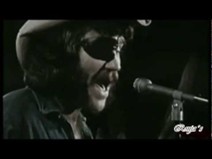
7. You’re So Vain (1972) – Carly Simon
Country: United States. Style: Soft rock/pop
Carly Simon wrote this song to describe a former boyfriend. For years, many people have wondered who the ex-boyfriend was, and many famous people have been named, including David Cassidy from The Partridge Family (see above) and Cat Stevens (also above). Carly Simon later explained that the person in the song was a combination of several ex-boyfriends, including a famous actor from the 1960s and 70s, Warren Beatty.
Language point: “Vain” is an adjective to describe someone who thinks too highly of themselves – someone who believes they are better looking, or more intelligent, or moe talented than others. To call someone vain is not a compliment, it’s a criticism.
“I’ll bet you…” is a common expression to show that you are very, very sure of something. In formal English we might write, “I will bet that you + verb”, but in conversation we usually drop ‘that’. You can also use the present tense, “I bet you…”
Interesting fact: Carly Simon started taking singing lessons when she was 8 years old. The reason? She had a bad stutter, and she found that the stutter disappeared when she sang.


8. Nutbush City Limits (1973) – Ike & Tina Turner
Country: United States. Style: Funk, R&B
Ike and Tina Turner were a husband and wife duo: Tina was the lead singer, while Ike was the bandleader and played keyboard and guitar. Tina Turner wrote this song about her hometown, also called Nutbush, a very small town in Tennesee.
Language point: “A one-horse town” is an expression used to describe a very, very small town. (Nutbush’s population was only about 250 people). Other vocabulary in the song also paints a picture of a very small town: “school house” (to describe a school that is usually just a single room) and “outhouse” (an outdoor toilet in a small shed, separate from the house).
Interesting fact: Many Australians aged in their 50s and 60s will remember a dance based on the song, called the Nutbush. This dance was popular only in Australia, and was often danced at school discos and weddings. It is believed to have been introduced through Australian schools as a way to teach children basic dancing.


9. Rubber Bullets (1973) – 10cc
Country: United Kingdom. Style: Art rock
10cc are an interesting English band. They first started playing music together in late 1960s, though they didn’t become 10cc until 1972. They are known for their “art rock” style where they experiment with different sounds and genres.
Language point: “Whacha gonna do about it?”, literally, What are you going to do about it? is a challenge to someone,meaning “You can’t do anything to stop me”. It can be used in a threatening way, (You got a problem with me? Whatcha gonna do about it?). But it can be used in a joking, teasing way (A: Hey, you took all my fries! B: So, whatcha gonna do about it?)
Interesting fact: This song was based on the Attica Prison riot in 1971 in New York State. During the riot, the prisoners took control of the prison to protest the poor conditions in the prison. The Governor of New York sent the police in to stop the riot, and 33 prisoners and 10 prison staff were killed.


10. Seasons In The Sun (1974) – Terry Jacks
Country: Canada. Style: Folk pop
This sad song is the story of a dying young man who is saying goodbye to important people in his life: his friend from childhood, his father, and a girl called Michelle who may be his daughter or a young girlfriend.
Language point: The expression “seasons in the sun” is not one that is commonly used in English, though all English speakers will understand its meaning. It means the happy times, the good times in a person’s life. A “season” here means a period of time, and the sun suggests happiness, wamth and fun.
Interesting fact: Learners from French-speaking countries might recognise the tune. It is from a 1961 Jacques Brel song called Le Moribund (The Dying Man). An American folk singer, Rod McKuen, wrote an English version of the song. Then Canadian singer-songwriter Terry Jacks re-wrote some of the words. Jacks had a close friend dying from cancer, and he wrote the song for his friend.


11. Bohemian Rhapsody (1975) – Queen
Country: United Kingdom. Style: Art rock/glam rock
Is this the best-known song from the 70s? This six-minute song has three separate parts and combines ballad, opera and hard rock styles. It is also well-known for its music video, which was unlike any music video before and helped make music videos more popular.
Language point: Several times in the song personal pronouns are removed: “caught in a landslide”, “just killed a man”, “sends shivers down my spine”. This is called ellipsis, or leaving out words that are easily understood. It is done to sound more dramatic or emotional. Note that this is different to the imperative used in the song which also removes the pronoun: “open your eyes”, “carry on”.
Interesting fact: At first, radio stations didn’t want to play the song because it was too long (around six minutes). The radio stations preferred songs that were around three to four minutes.
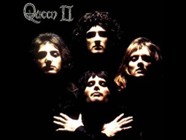
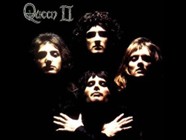
12. Fox On The Run (1975) – Sweet
Country: United Kingdom. Style: Glam rock
English band, Sweet (sometimes known as The Sweet) were one of the biggest glam rock bands of the 70s. They were known for their colourful outfits and their bright, energetic rock songs, althought later they wanted to be known as a serious heavy metal band.
Language point: “Everybody comes a-running" is simple an old-fashioned way of saying "everybody comes running". The pattern "verb + a + -ing verb" is often found in folk songs, traditional stories, and country music, for example, “This problem got me a-thinking”. It gives a traditional feeling but is not used in modern everyday English. Sweet probably used it so that the line scans better, ie the words fit the beat of the music better.
Interesting fact: The band quickly wrote they lyrics in a pub just before they recorded the song. In fact they wrote it in such a hurry that it is missing a final verse.


13. It’s A Long Way To The Top (If You Wanna Rock’n’Roll) (1976) – AC/DC
Country: Australia. Style: Rock
So you want to be in a rock band? Well, it’s not fun and good times, according to this song – you can get robbed, beaten up, have your money stolen by your own agent. Apparently this really did happen to AC/DC when they first started out.
Language point: "Riding down the highway, going to a show, stopping on the byways": these are participial phrases. A participial phrase begins with a participle (a verb + -ing or -ed) and describes a noun. In these examples, the noun being described is the the band itself. Participial phrases are a great way to add detail to a sentence without making it too long.
Interesting fact: In the music video, the band plays on the back of a truck that is driving down one of Melbourne’s main streets. Many years later, in tribute to the band and the video, the Melbourne government named a nearby lane, AC/DC Lane. Now the lane is covered in murals (wall paintings) including portraits of band members.


14. Living Next Door To Alice (1976) - Smokie
Country: United Kingdom. Style: Pop
This song tells a story about a man who has secretly been in love with his neighbour, Alice. Now she is moving away, and he is heartbroken that he never told her how he felt about her.
Language point: The Present Perfect Continuous tense – has/have + been + verb(-ing) – is a difficult tense for English learners to use correctly. The line in the chorus “I’ve been living next door to Alice…” is an excellent example of the verb’s proper use. It describes an action (“living”) that started in the past (24 years ago), and is still continuing or has only just stopped.
“To get used to” something (“I will never get used to not living next door to Alice”) is a very common and useful expression. We use it to describe something that at first feels difficult or strange but later becomes normal or comfortable. In the song, it is in the negative, so the situation will never feel comfortable or normal for the singer.
Interesting fact: Not many people know that this is actually a cover version. The original was recorded by an Australian band called New World a few years earlier, but it didn’t have much success.


15. Hotel California (1977) – The Eagles
Country: United States. Style: Rock/pop
Another memorable song from the 70s, the Eagle’s soft rock classic is famous for its beautiful guitar melody as well as its mysterious lyrics.
Language point: “Such a (lovely place)” is a useful phrase called a degree intensifier. We use it to add extra feeling, and it can be positive (It’s such a great movie!) or negative (The builder did such a bad job!) It usually gives a stronger feeling than using “really” or “very”.
Interesting fact: The lyrics are very mysterious, and over the years fans have come up with theories as to what exactly is the Hotel California. They include a mental asylum, a drug rehabilitation clinic and even a devil-worshipping church in San Francisco. The band, however, has said it is none of those things, and that the song is about the journey from innocence to experience.


16. Holiday In The Sun (1977) – Sex Pistols
Country: United Kingdom. Style: Punk
The Sex Pistols are one of the most controversial bands of all time. They shocked England – and many other countries – with their lyrics, their clothes and haircuts, and the way they behaved on stage and in interviews.
Language point: The song shows two uses of the very common, informal word “got”: The first is as another more casual word for ‘have’ (Now I got a reason). The second is in place of ‘have’ in the verbal phrase ‘have to’ (I got to go over the wall).
Interesting fact: The idea for the song came to the band when they were banned from taking a holiday on an island near England, the Channel Islands. So instead they went to West Berlin for their holiday.


17. Stayin’ Alive (1978) – Bee Gees
Country: Australia. Style: Disco
Wait a minute, this is an Australian song? Well, the three Gibbs brothers (Bee Gees is short for Brothers Gibb) grew up in Australia and started their singing career there. Also the idea for the song was suggested by the group’s manager, Robert Stigwood, also an Australian. So I’m counting it as Australian.
Language point: “Somebody help me”. The construction combining an indefinite pronoun with an imperative verb is used to issue a command or request to an unspecified member of a group. Other examples: “Someone give me a hand”, “Nobody move!” “Everybody listen up”, “Everyone take a seat”
Interesting fact: The song is widely used in CPR first aid training. CPR stands for Cardiopulmonary Resuscitation – it’s emergency first aid used to keep a person alive by pushing on their chest when their heart has stopped. “Stayin’ Alive” is used because its beat matches the correct rate of pushes when doing CPR (just over 100 beats per minute).
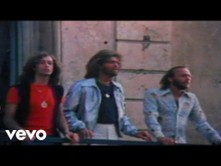
18. Y.M.C.A (1978) – The Village People
Country: United States. Style: Disco
The YMCA is an organisation that provides services to young people, including emergency accommodation for men. Because several of the Village People’s band members are gay and the band had a large following in the LGBTQ+ community, many people thought this song was celebrating Y.M.C.A hostels (a hostel is a cheaper type of hotel) as a meeting place for gay men. However, the band has said that it is not the case, and is simply a fun song that also celebrates the good work the YMCA does.
Language point: “It’s fun to + verb”, or “It’s adj + verb” is called extraposition, where we change the word order of a sentence to make it sound more natural. “To stay at the YMCA is fun” sounds too formal or awkward, so we move the subject “to stay at the YMCA” to the end, and a “dummy” subject “it” is placed at the start.
Interesting fact: Y.M.C.A is one of United States President Donald Trump’s favourite songs, and it is often played at his rallies. When he visited China recently, the Chinese Army band played an instrumental version of the song to welcome him.
19. I Will Survive (1979) – Gloria Gaynor
Country: United States. Style: Disco
This song is popular because its words give courage and inspiration to anyone going through a hard time. Plus it has a great beat to dance to!
Language point: Is there a difference between “will” and “going to” when talking about the future? Often, either can be used without changing the meaning. As a general guide, we tend to use “will” when making a quick decision, a prediction, or expressing a strong belief. “Going to” is more common when we already have a plan or a specific reason for doing something. In this song, “I will survive” sounds more determined and defiant than “I’m going to survive” — which is exactly the feeling Gloria Gaynor is going for.
Interesting fact: The song was originally recorded as the B-side of another song. In those days songs were released on small vinyl records (called singles), with the main song on the A-side, and a filler song on the B-side. But DJs at nightclubs and discos preferred “I Will Survive” to the A-side, and played it instead.


20. I Don’t Like Mondays (1979) – The Boomtown Rats
Country: Ireland. Style: Rock/pop
On a Monday morning in January 1979, in San Diego, California, a 16 year old girl started shooting at children who were waiting at the entrance of their school. She killed two people and injured nine others. When asked why she did it, the girl replied, “I don’t like Mondays. This livens up the day”. The shooting is believed to be the first mass shooting at a school in the United States. (Unfortunately there have been many, many more since then).
Language point: “And he can see no reason…” is an example of using "no" directly before a noun, instead of "not any". Repeated throughout, this construction sounds more emphatic or stronger than the standard form. "I have no idea" feels stronger and more final than "I don't have any idea."
Interesting fact: Bob Geldorf, the Boomtown Rat’s singer and co-writer of the song, later said that he regretted writing it. This was because the girl killer wrote to him from prison saying that she was glad she shot at the school children because his song helped make her famous.


Useful Vocabulary
The words and phrases below all appear in the article above. Read the definitions, then go back and find them in the text.
catchy – easy to remember and pleasing to hear; it stays in your head
sitcom – a funny television series about the same group of characters in everyday situations; short for "situation comedy"
generation gap - a difference in ideas or behaviour between younger and older people
converted to – when someone changes to a new religion
harmonies – when two or more people sing different notes at the same time to create a rich, full sound
took their toll - caused damage or make someone tired or weak over time
stutter – a speech problem where the first sound of a word is repeated several times before completing it
riot – when a large crowd of people behave violently in a public place, often out of anger
beaten up – physically attacked and injured by another person or group of people
in tribute to – done to show respect and admiration for someone, especially someone who has died or achieved something important
mental asylum – an old-fashioned term for a hospital where people with serious mental illness were kept
rehabilitation clinic – a place where people receive treatment and support to recover from addiction to alcohol or drugs
controversial – causing strong disagreement or debate among people
banned – officially not allowed; forbidden by a law, rule, or authority
rallies – large public meetings or gatherings, usually to show support for a political cause or idea
inspiration – a person, event, or experience that gives someone the idea or motivation to create or do something
filler – a song, scene, or section that is included to fill time but is not particularly interesting or important
livens up – makes something more exciting
mass shooting – an incident in which one person (or sometimes more) shoots and kills or injures a large number of people in a public place
Thank you for reading! I hoped you discovered a few new expressions, or even a new favourite song.